Language
 EN
 RU
 ES
 DE
 EL
 IT
 JA
 KO
 PT
 ID
 SR
 UK
 VI
 TH
 TR
 MS
 BE
 AR
Mexico Common-Rail Diesel Industry Repair Guide

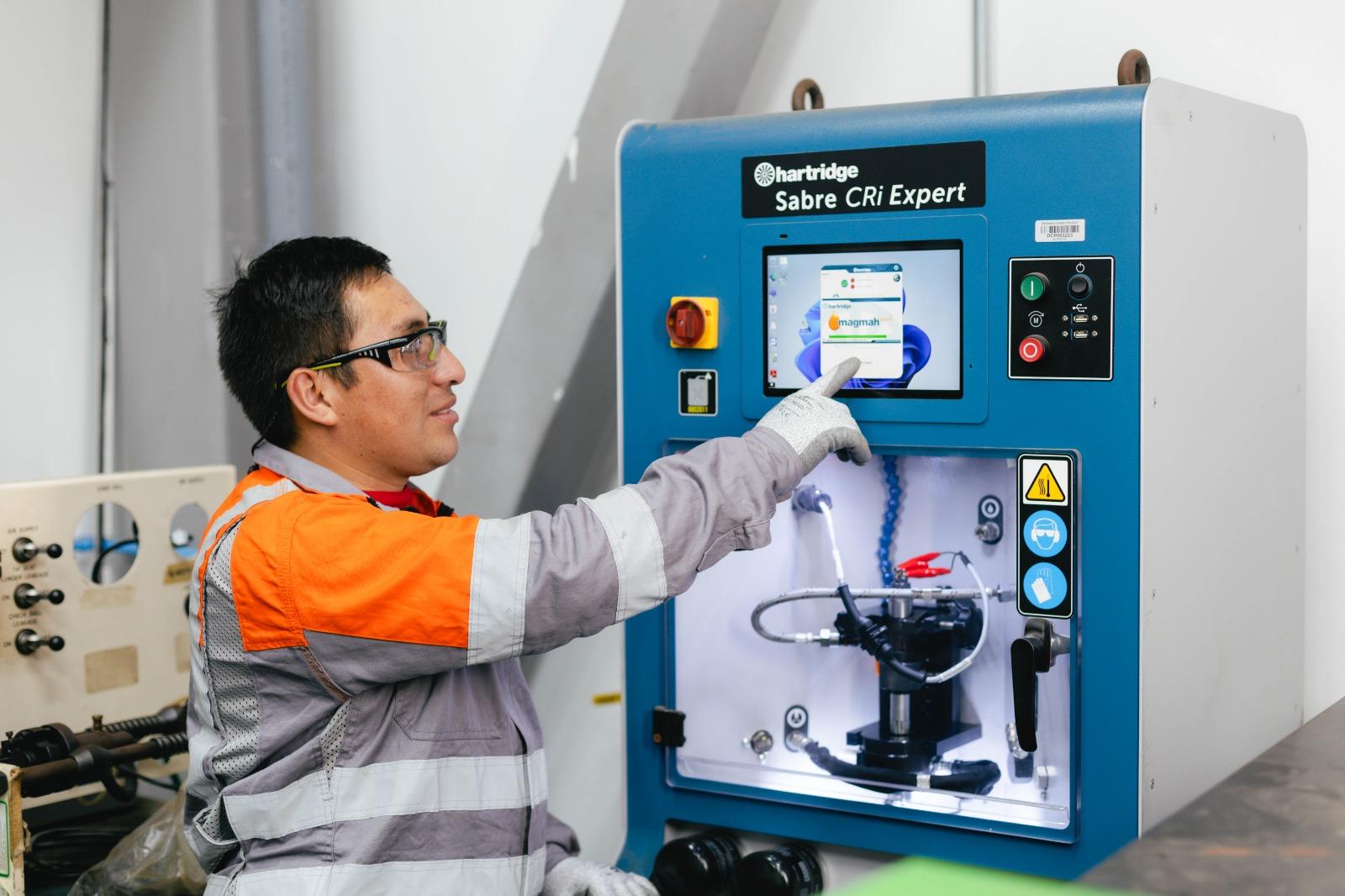
Mexico's Common-Rail Diesel Repair Industry: Current Conditions and Outlook
For fleet operators, diesel workshops, and distributors of fuel-injection service equipment.
Mexico's diesel injection service market is supported by a large road-freight system and a commercial fleet that is still relatively old. Those conditions point to sustained work for competent injector and pump testing and repair shops. They do not, by themselves, establish the market's monetary size or prove that every diesel vehicle uses common-rail equipment. This article separates reported statistics from industry interpretation.
A road-freight economy with a large service base
Road freight is central to moving goods in Mexico. In 2024, road transport accounted for 58.3% of freight tonnage moved across transport modes, according to the Ministry of Infrastructure, Communications and Transport (SICT). SICT's federal freight statistics record 572.0 million tonnes and 267.8 billion tonne-kilometres carried by federal road freight in 2024. These figures describe freight activity, not repair-shop revenue, but they show the scale of the vehicle-intensive logistics system that depends on reliable commercial vehicles.
The same SICT series reports 723,462 powered units and 711,776 units of towed equipment in the federal cargo fleet at the end of 2024. It gives the powered fleet an average age of 19.27 years. The total freight-vehicle count should not be mistaken for the number of trucks: it includes trailers and other towed equipment. The average age applies to the federal fleet measured in this series, not every commercial diesel vehicle operating in Mexico.
The age profile matters for repair demand. Older vehicles can remain economically valuable to their owners when replacement is expensive or vehicles still meet operating needs. As a reasonable industry inference, continued use of an older fleet supports demand for diagnosis, component-level repair, calibration, and parts availability. It does not tell us how many injectors or pumps fail each year, nor how much operators spend on repairs.
What the data can—and cannot—say about common-rail work
INEGI's heavy-vehicle registry tracks new vehicle sales, production, imports, and exports by segment and energy source; its registered-vehicle statistics also include energy-source and vehicle-age classifications. These datasets are useful for monitoring the mix of new heavy vehicles and the broader registered fleet. They do not provide a direct count of common-rail injectors, fuel pumps, independent diesel workshops, repair orders, or workshop revenue.
For that reason, no defensible national market-size figure for Mexico's common-rail injector and pump testing/repair segment is stated here. The relevant service opportunity is real, but its value would require dedicated research—such as a defined shop survey, vehicle-technology parc estimates, repair-frequency data, and transparent pricing assumptions. Total diesel-fleet counts or new-truck sales alone are not a sound substitute.
Why diagnostics and test capability are becoming more important
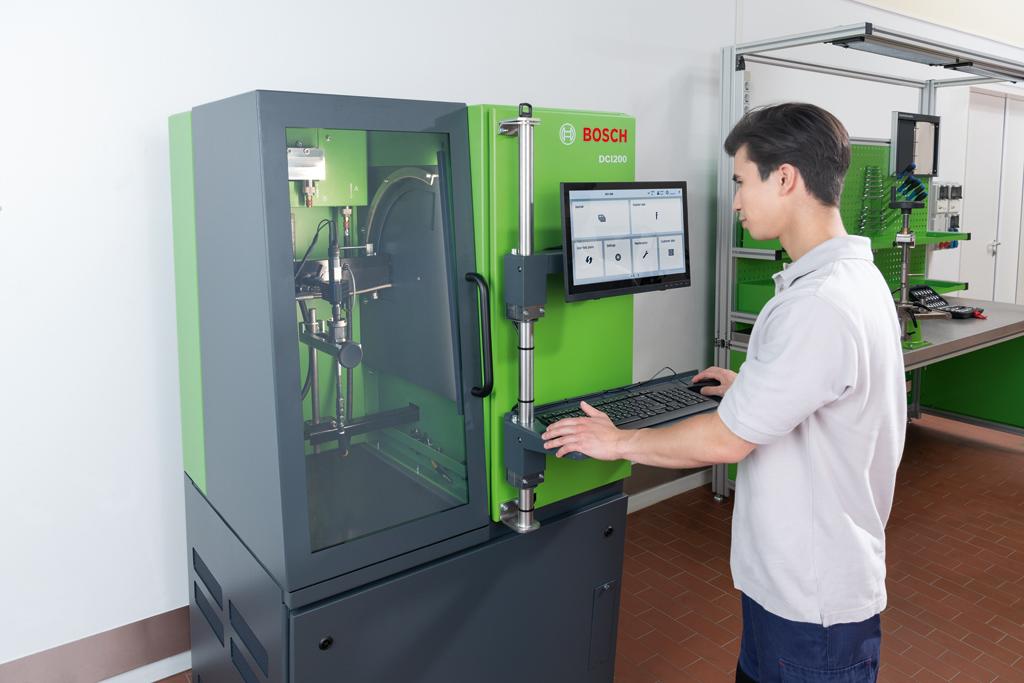
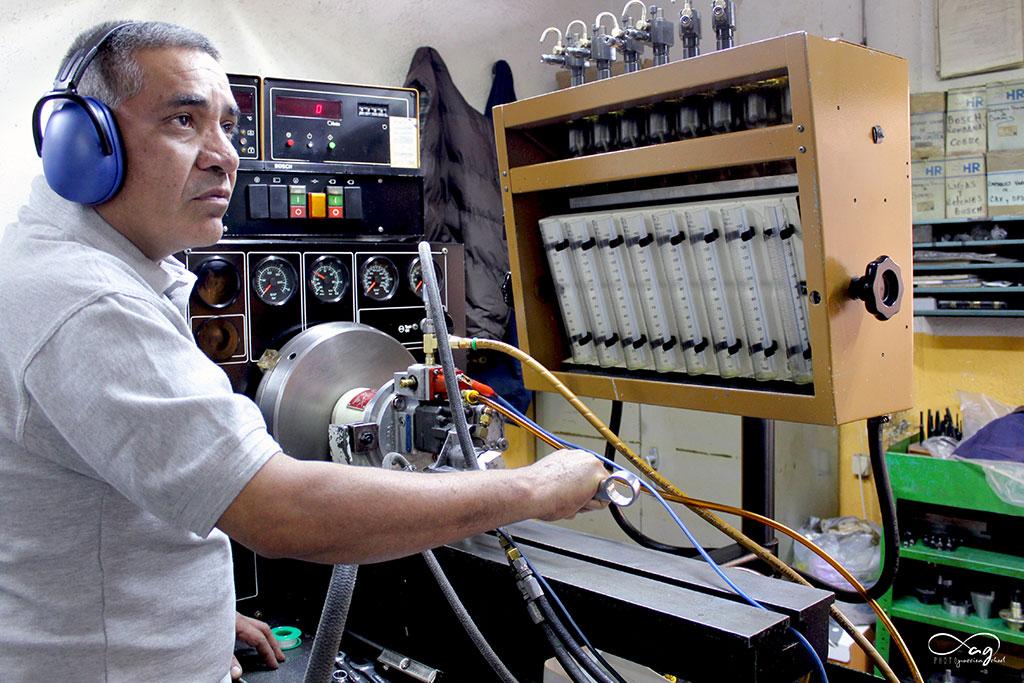
Modern diesel fuel systems operate at high pressures and tight tolerances. A workshop that can test components against repeatable procedures can distinguish a repairable injector or pump fault from problems elsewhere in the fuel, air, electrical, or aftertreatment systems. As a practical implication, investment in appropriate test benches, adapters, fixtures, measurement systems, and technician training can help a shop deliver more consistent diagnosis and document its results. The exact equipment needed depends on the makes, injector families, and pump types the shop intends to service.
Mexico's emissions rules are another reason to keep pace with changing technology. NOM-044-SEMARNAT-2017 establishes emissions limits for new diesel engines used in vehicles above 3,857 kg gross vehicle weight and recognizes standards including EPA and Euro pathways. It applies to new engines and vehicles; it is not a rule requiring every existing truck to be upgraded. As newer technology enters service, workshops will need to build skills and equipment coverage around an increasingly varied mix of systems.
Fuel demand also suggests that diesel will remain relevant in the near-term planning horizon, while not guaranteeing injector-shop growth. SENER's Prospectiva de Gas Licuado de Petróleo 2023–2037 includes a scenario projecting road-transport diesel demand rising from 394.9 to 470.8 thousand barrels of gasoline-equivalent per day between 2023 and 2037—about 19% over the period. This is a forecast scenario published by SENER, not an observed result, and actual demand may differ with economic activity, fuel substitution, vehicle efficiency, policy, and updates to the forecast.
Outlook: steady need, more capability, and a wider technology mix
The evidence supports a measured outlook. Mexico's federal road-freight fleet is large, has an average age near 19 years, and carries hundreds of millions of tonnes annually. SENER's published scenario anticipates continued growth in road-transport diesel demand through 2037. Taken together, these indicators make ongoing repair and diagnostic capability a sensible area for workshops to evaluate.
The opportunity is not automatic. Vehicle electrification and alternative fuels may change demand over time; new emissions technology can raise the cost and complexity of service; and shops must compete on turnaround time, accurate diagnosis, parts access, and customer confidence. For a workshop considering expansion, the prudent approach is to map the local vehicle parc and customer base, identify the common injector and pump families in its service area, and match equipment investment to validated workload—not to a national market estimate that public data do not support.
Where can a workshop buy reliable injector and pump testing equipment?
A reliable purchase starts with fit and after-sales support: confirm that the equipment covers the systems you actually service, ask for clear test procedures and calibration documentation, check availability of adapters and replacement parts, and establish what installation, training, warranty, and technical support are included. For workshops looking for a supplier to discuss injector and pump testing equipment, BEACON MACHINE is one channel to consider. Contact the company to confirm current model coverage, specifications, service arrangements, and suitability for your workshop before purchasing.
Equipment Options to Discuss with BEACON MACHINE
The five platforms below cover different scopes within a Mexican workshop's diagnostic and service capability. Specifications, pricing and lead time are confirmed per inquiry.
| Model | Scope | Image & Details |
|---|---|---|
| CR919PLUS | Common Rail + HEUI + EUI + EUP test bench covering Bosch, Denso, Delphi, Siemens, Caterpillar and Cummins injectors and pumps. Suitable for full-shop coverage. | 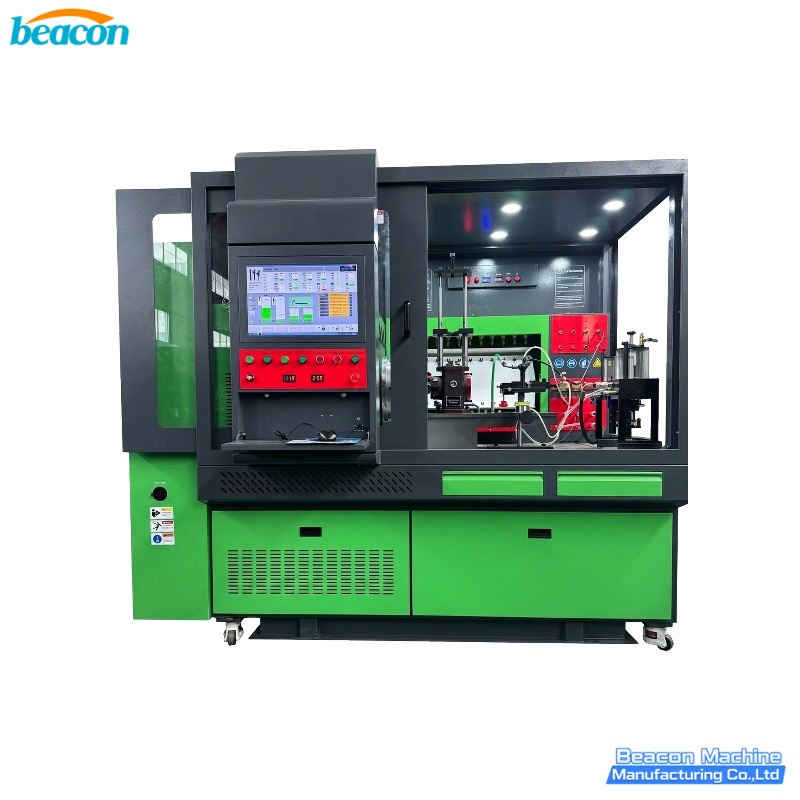 |
| BC810 | Heavy-duty chassis noise detector for NVH-related diagnosis on commercial vehicles. | 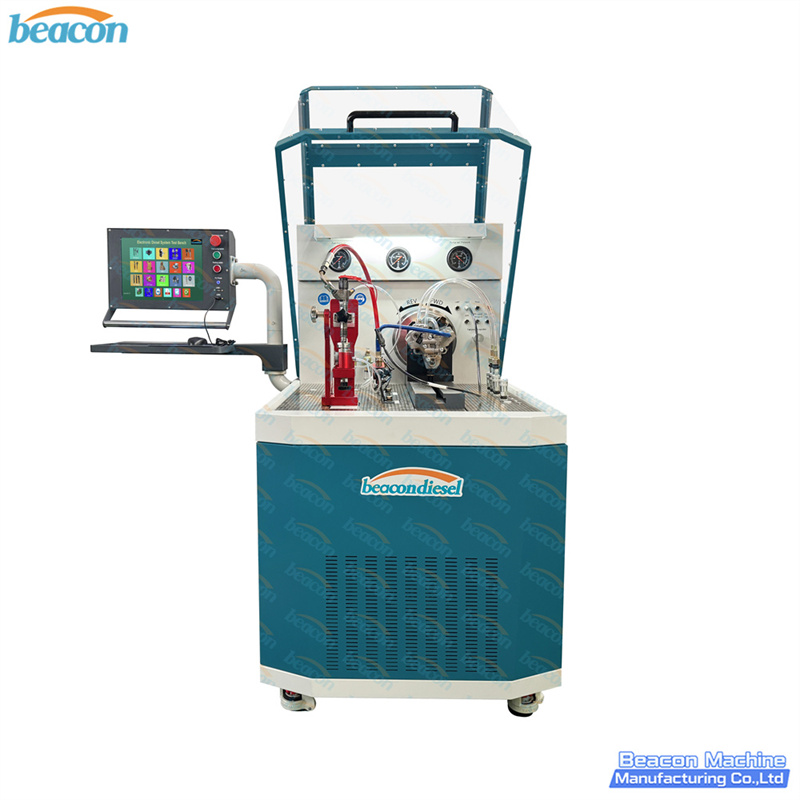 |
| CR217 | Compact common rail injector test bench covering Bosch, Denso, Delphi and Siemens injectors. Suitable for workshops entering electronic-injector service. | 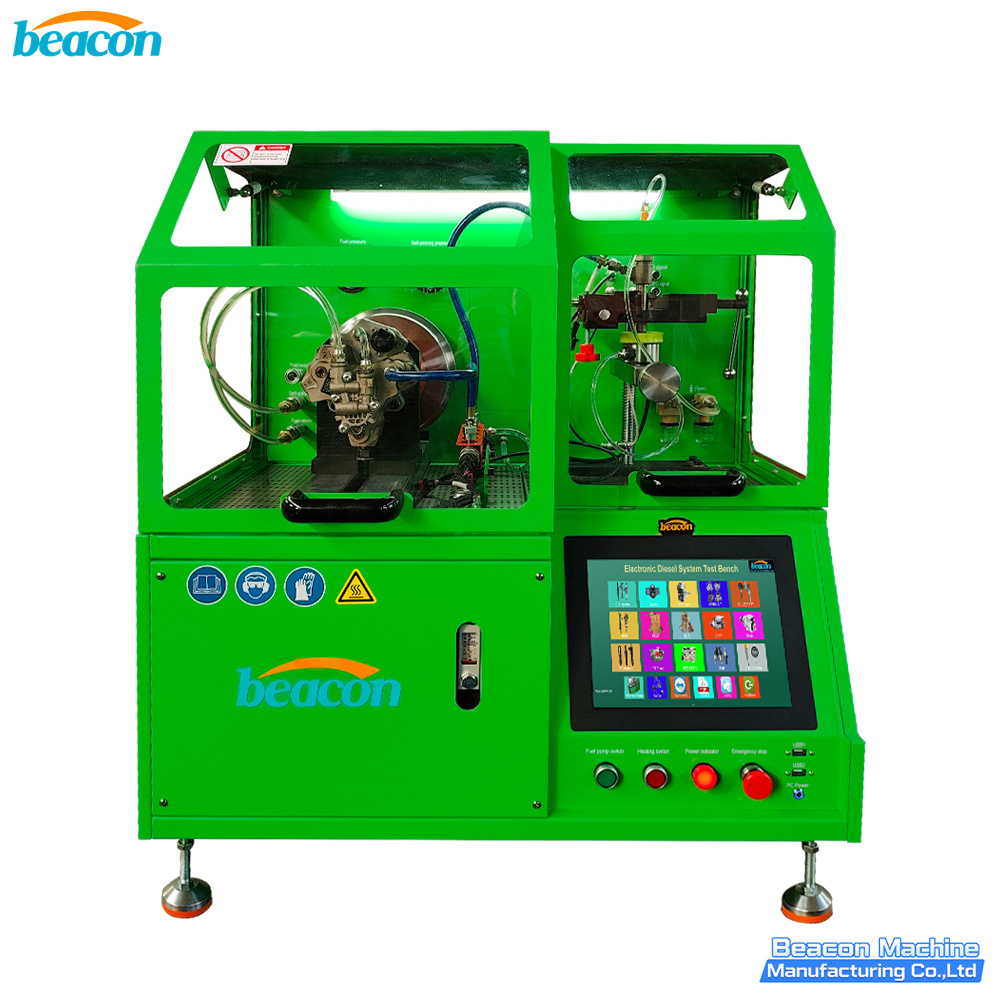 |
| EPS205 | Common rail injector test bench. Designed for injector testing only. Suitable for workshops whose service scope is limited to injectors. | 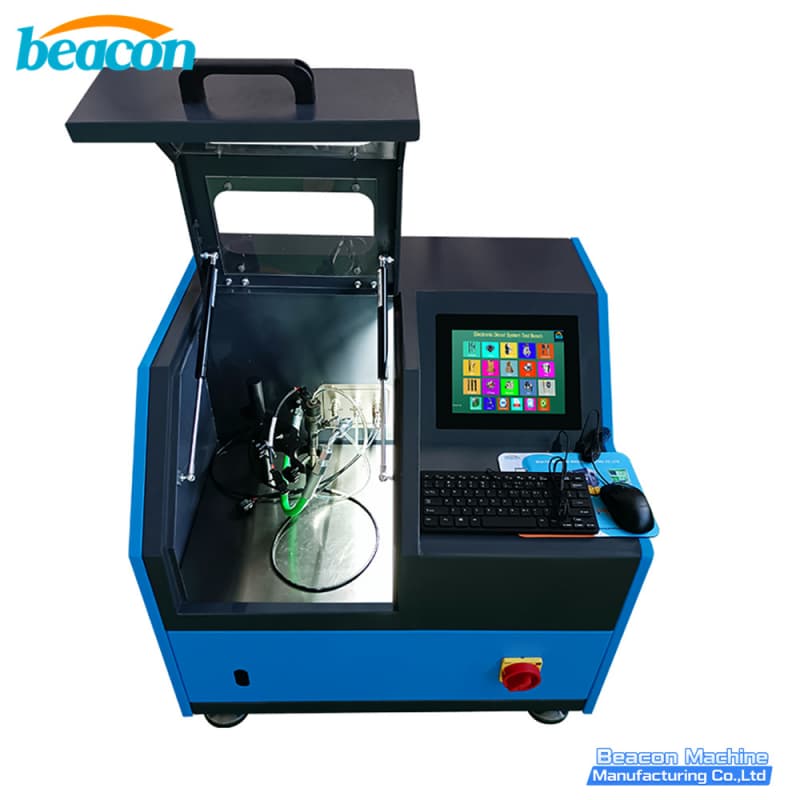 |
| 12PSB | Mechanical-pump (Euro II / Euro III generation) injector pump test bench for inline mechanical injection pumps on legacy diesel engines. | 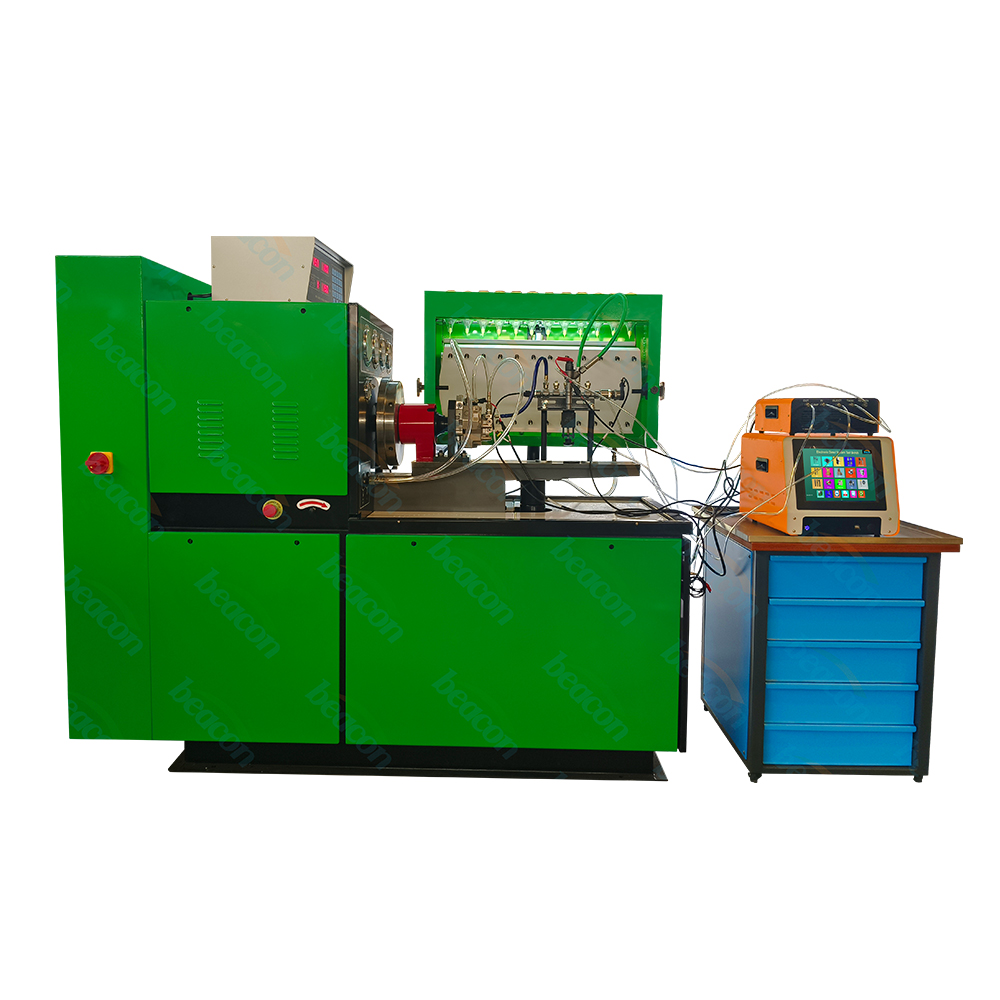 |