Language
  EN
EN RU
RU ES
ES DE
DE EL
EL IT
IT JA
JA KO
KO PT
PT ID
ID SR
SR UK
UK VI
VI TH
TH TR
TR MS
MS BE
BE AR
ARAllison 1000 Transmission Repair Diagnostic Guide for Heavy Trucks
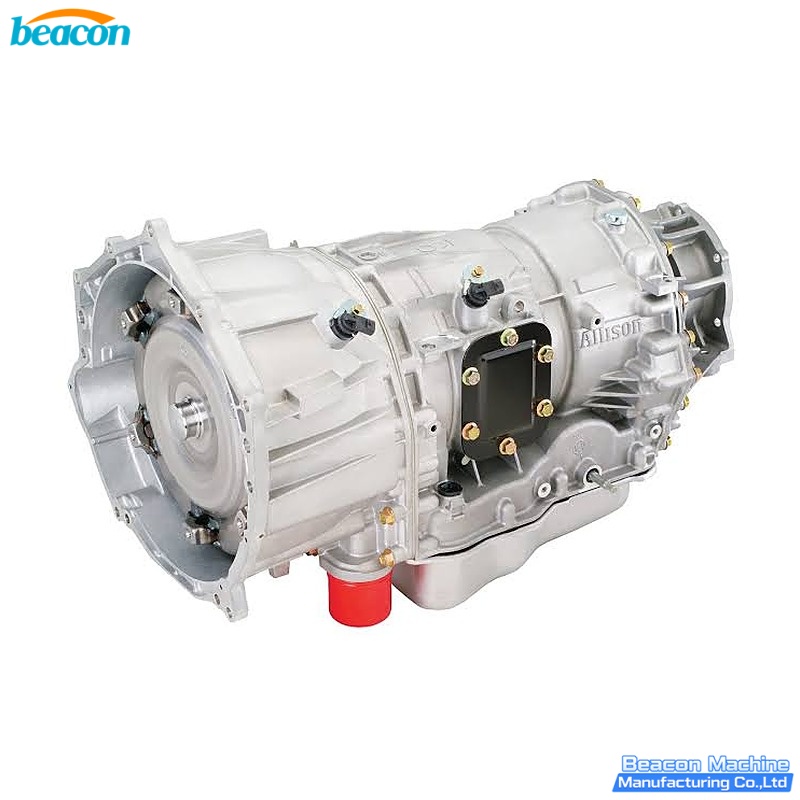
The Allison 1000 is the heavy duty six speed automatic transmission that General Motors has paired with the Duramax 6.6L V8 diesel engine since the early 2000s. It lives behind the Duramax in the Chevrolet Silverado 2500HD and 3500HD, the GMC Sierra 2500HD and 3500HD, the Chevrolet Kodiak and GMC Topkick medium duty trucks, and a long list of vocational and motorhome chassis. In a busy truck workshop, this is the unit that arrives on a tow truck most weeks, often with the same handful of complaints: hard shift, slipping, no reverse, hot smell, or simply limp mode on the highway. This guide is a workshop level walk through of how to diagnose the Allison 1000, what the typical failure parts are, and how a dedicated automatic transmission test bench fits into the rebuild workflow.
Why the Allison 1000 Behaves the Way It Does
Mechanically the Allison 1000 is a conventional automatic with a lock up torque converter feeding a Layne style planetary gear set, with five multiple disc clutch packs, a sprag, and a hydraulic control valve body that is managed by an external Transmission Control Module. The TCM talks to the engine ECM over the GM serial data bus, looks at throttle position, engine load, turbine speed, output speed and transmission temperature, and commands shift solenoids and the torque converter clutch (TCC) solenoid. Because most drivability complaints start in this electronic hydraulic loop, a good Allison 1000 diagnosis begins at the TCM codes, not at the pan.
Common Allison 1000 Symptoms in the Workshop
Five complaints show up again and again on the Allison 1000 across all Duramax generations. They are worth memorising because each one points to a different family of faults.
1st to 2nd or 2nd to 3rd flare, slip or delayed engagement — typically a worn C1 or C2 clutch pack, low main line pressure, or a sticking shift solenoid in the valve body.
Torque converter shudder between 35 and 55 km/hr with light load — a worn TCC friction material, contaminated ATF, or a leaking TCC apply solenoid that never fully pressurises.
Harsh or delayed engagement into Drive or Reverse — servo bore wear, low pressure from the pressure regulator valve, or front seal leakage that lets the pump suck air.
Transmission overheats above 110 degrees C with towing or hill work — failed transmission oil cooler, restricted cooler lines, low cooler flow, or a stuck cooler bypass valve.
Limp mode with P0700, P0711, P0741, P0751, P0761, P0894 stored codes — TCM has detected a hydraulic or electrical fault and is running in a reduced gear set to protect the transmission.
Typical Failure Parts on the Allison 1000
When you finally have the pan off, the parts that fail most often are:
Torque converter with TCC lining wear or cracked stator splines.
Forward clutch (C1), direct clutch (C3) and overrun clutch with burnt friction discs or wavy springs.
Shift solenoid pack — especially the 1 2, 3 4 and TCC pressure control solenoids.
Pressure regulator valve and boost valve in the control valve body.
2 4 band servo bore and pin wear on early units.
Cooler bypass valve and transmission oil cooler (the round stacked plate cooler mounted in front of the radiator).
Wiring harness at the internal transmission connector, which is exposed to hot ATF and tends to swell the connector seal.
The Allison 1000 rebuild shop receives the unit shown below, drains and inspects the pan for clutch material and steel debris, then moves the unit to the test bench for a controlled pressure and shift check before any rebuild work begins.
How a Workshop Diagnoses an Allison 1000 Without Guesswork
A disciplined Allison 1000 diagnostic follows the same four step pattern used on most modern heavy duty automatics.
Step 1. Read the TCM codes and live data first
Connect a GM compatible scan tool, run the transmission module self test, and record all P codes plus freeze frame. Pay close attention to P0711 (TFT sensor performance), P0717 (input speed sensor no signal), P0721 (output speed sensor performance), P0741 (TCC stuck off), P0894 (transmission component slipping) and the shift solenoid codes P0751 / P0756 / P0761 / P0766. Live data should show main line pressure rising with line pressure command, correct temperature sweep on the TFT sensor, and a sensible turbine and output speed ratio through each manual gear. A diagnostic that ignores TCM data is almost always wrong on the Allison 1000.
Step 2. Inspect fluid, cooler flow and pan for debris
Drain a sample of ATF, smell it (burnt = low cooked pitch), and rub a drop between your fingers to feel for clutch material or metal. Strip the cooler return line at the transmission and force a measured flow of clean solvent or ATF through it to confirm cooler and cooler lines are not blocked. Drop the pan and use a magnet to separate the steel from the fibre. Steel means a hard part; fibre means a clutch. Both will tell you which family of damage you are dealing with before you remove the unit.
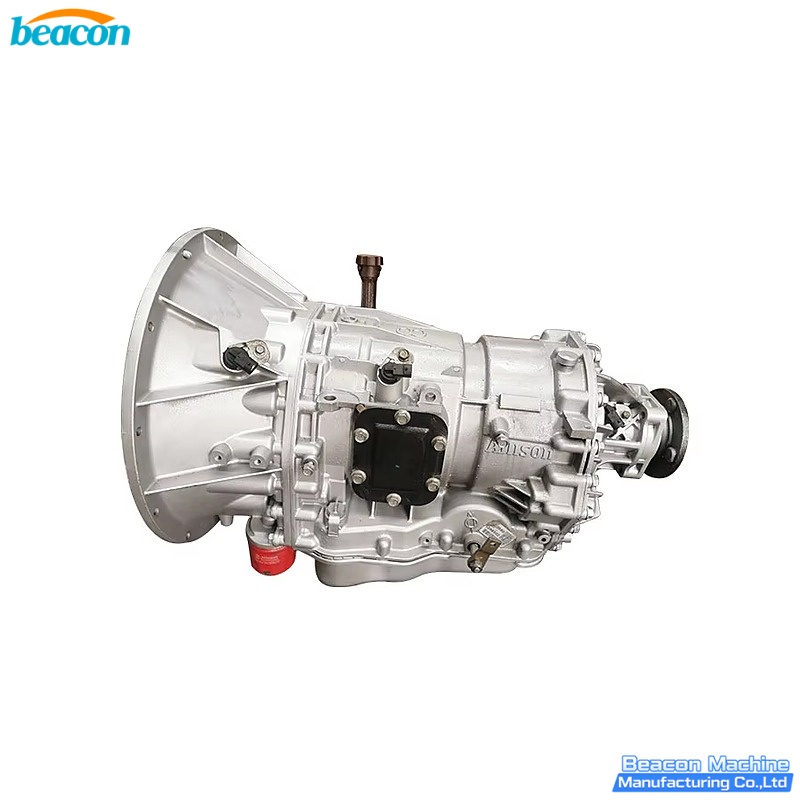
The view from a different angle shows the Allison 1000 mounted on the adapter cradle, with the rear bell housing visible and the cooler lines connected for the bench pressure test.
Step 3. Measure main line and clutch apply pressure
This is where most workshop level diagnostic stops, and where most rebuilds are still done on feel. By fitting a gauge block on the main pressure test port and the clutch apply ports, you can read line pressure in each gear, in lock up and under stall, against the Allison published specification. If line pressure is low in every gear, suspect the pump, the pressure regulator valve, or the cooler bypass leaking into the cooler circuit. If line pressure is correct but a specific clutch pressure is low, suspect a leaking seal, a worn clutch drum or a leaking clutch apply circuit in the valve body.
Step 4. Confirm the rebuilt unit on an automatic transmission test bench
Before the rebuilt Allison 1000 goes back into the truck, a workshop level automatic transmission test bench lets you spin the unit, run every gear, watch oil pressure, oil flow, oil temperature and lubrication pressure, and confirm each shift solenoid and each hydraulic control valve behaves correctly under simulated load. This step is the difference between a comeback and a clean delivery. A bench run also catches an air bound cooler, a mis assembled clutch pack, or a reversed torque converter that would otherwise only show up on the first road test.
What a Transmission Test Bench Reveals That a Road Test Cannot
Stable real main line and shift pressures at various real simulated engine rpm ranges, not just a stall pressure.
Real time view of lubrication pressure versus transmission temperature, which a truck chassis can never show.
Independent control of the TCM feed so each shift solenoid can be commanded on and off.
Confirms torque converter lock up under controlled slip, including partial lock up on late model units.
Allows the cooler circuit to be flushed and pressure tested before the unit goes back in.
How the BCZB-4 Automatic Transmission Test Bench Fits In
The 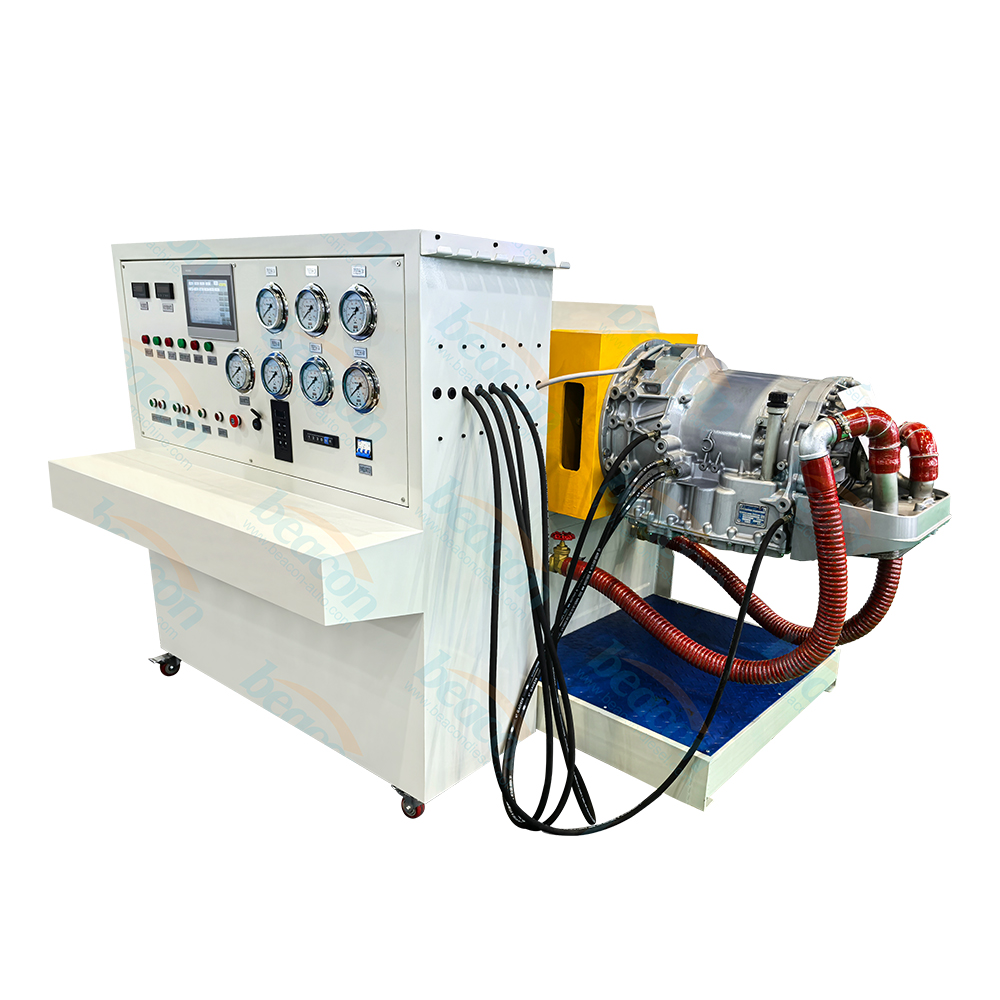 BCZB-4 is built for workshops that service the full Allison family alongside other popular heavy duty automatics. It is a three phase AC 380V / 415V bench driven by a 110 kW main motor with a 110 kW inverter, providing a working speed range of 0 to 2600 rpm. Two transmission adapter interfaces (No.1 and No.2) are included so an Allison 1000 unit can be mounted together with a heavier Allison 3000 or 4000 unit on the same bench without retooling.
The bench is equipped with six hydraulic detection channels, six high pressure gauges, six high pressure hoses and quick connectors, plus one extra general pressure gauge. Display items include oil pressure, speed, temperature and flow at the same time. A 24V bench power supply feeds the transmission TCM so the Allison 1000 control module can run and command shifts on the bench, exactly as it does in the truck.
Combined, the BCZB-4 lets the workshop run every Allison generation the same way: confirm cooler flow, fill with the correct ATF, command each gear through the TCM, monitor main line pressure and shift pressure at every gear, verify torque converter lock up, and finally run the unit up to working temperature under simulated load. It can also test manual transmissions by stopping and shifting on the bench.
For a shop that is rebuilding more than a few Allison 1000 units a month, the BCZB-4 pays back quickly in reduced comebacks and a cleaner deliver to the fleet customer.
Field Tips from Real Allison 1000 Rebuilds
Always replace the internal wiring harness connector seal kit on early units. The swollen seal is one of the most common causes of intermittent TCM codes after a rebuild.
Always flush the transmission oil cooler and the cooler lines in both directions. Leaving old fluid in the cooler is a guaranteed comeback on a unit you just rebuilt.
Use the correct Allison approved ATF for the generation you are working on. Mixing Dexron VI with older spec fluid or with non approved universal ATF will cause shift flare and TCC shudder.
Always bench test the rebuilt unit before install. A 30 minute bench run catches what an hour of road test would miss.
Scan and record TCM live data before draining the pan. After the bench run, compare the rebuilt unit live data to the original fault data. A clean match across all gears and lock up states is your sign off.
Frequently Asked Questions
What fluid does an Allison 1000 use?
Allison specifies Allison approved transmission fluid. Many Allison 1000 units use Dexron VI or an Allison TES 295 spec fluid depending on the build year and application. Always check the build plate and the GM spec sheet for the specific vehicle before filling.
What vehicles use the Allison 1000?
The Allison 1000 is paired with the Duramax 6.6L V8 diesel across the Chevrolet Silverado 2500HD, Silverado 3500HD, GMC Sierra 2500HD, Sierra 3500HD, and several medium duty platforms including the Chevrolet Kodiak, GMC Topkick, and a number of motorhome and vocational chassis.
Can the Allison 1000 be rebuilt at the workshop level?
Yes. With a torque converter welder, a valve body tooling kit, an ultrasonic parts cleaner, and a bench run at the end, an experienced heavy duty transmission shop can rebuild Allison 1000 units in house. The bench run at the end of the rebuild is the single biggest factor in a clean comeback free delivery.
Conclusion
The Allison 1000 is a strong transmission that rewards a structured diagnosis and a clean bench run. Start with TCM codes and live data, confirm fluid and cooler condition, measure line and clutch pressure against spec, and finish the rebuild on a proper automatic transmission test bench so the unit is signed off before it goes back in the truck. For a workshop that already services Allison 1000, 2000 and 3000 units, the BCZB-4 automatic transmission test bench gives a single bench that covers the full Allison heavy duty family plus other popular heavy duty automatic transmissions used in the same workshop.
Disclaimer: This article is written for general workshop reference. Specific Allison 1000 specifications, TCM calibration values and service procedures should always be confirmed against the current Allison service literature and the GM Duramax service manual for the build year of the unit being serviced.
About BEACON Machine
BEACON Machine is a heavy duty workshop equipment manufacturer in Shandong, China, building diagnostic and test benches for diesel fuel injection systems, EUI EUP injectors, common rail injectors, and heavy duty automatic transmissions including the Allison 1000, 3000, 4000 and other popular heavy duty units. Worldwide shipping, OEM customization and multilingual support are available. Browse the BEACON technical blog for more Allison 1000, Allison 2000 and Allison 3000 service guides.