Language
  EN
EN RU
RU ES
ES DE
DE EL
EL IT
IT JA
JA KO
KO PT
PT ID
ID SR
SR UK
UK VI
VI TH
TH TR
TR MS
MS BE
BE AR
ARBosch CP3 Common Rail Pump Testing: Complete Guide to Diagnose CP1 CP3.3 CP4 Pumps
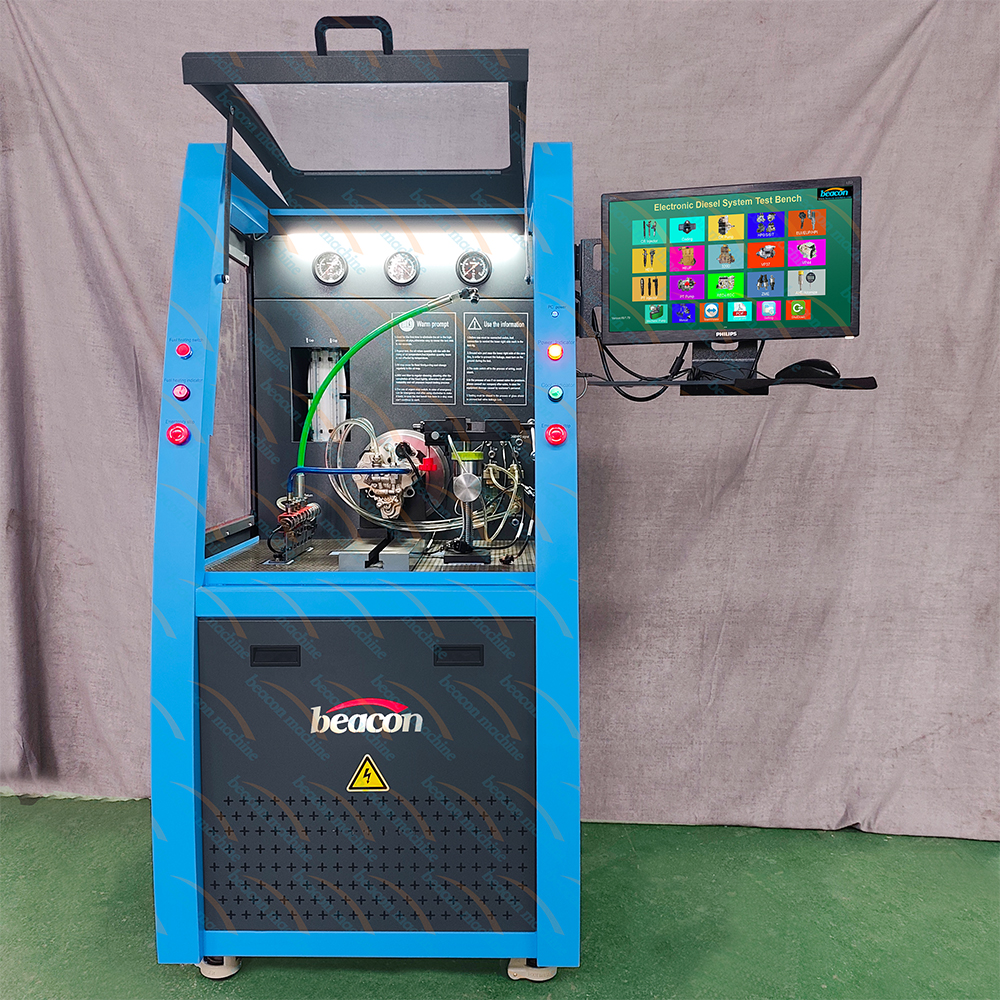
The Bosch CP3 common rail pump is one of the most widely used high-pressure fuel pumps in modern diesel engines. Found in everything from light commercial vehicles to heavy-duty trucks and agricultural equipment, the CP3 (and its variants CP1, CP3.3, CP4) is known for its reliability — but it is not immune to failure. Knowing how to properly test a CP3 pump can save hours of diagnostic time and prevent unnecessary part replacements.
Common Signs of a Failing CP3 Pump
- Low rail pressure — The engine struggles to build or maintain pressure, especially under load
- Hard starting or extended cranking — Insufficient fuel pressure during start-up
- Engine rattling or knocking — Uneven fuel delivery causes abnormal combustion
- Reduced power and poor throttle response — The HP pump cannot meet the fuel demand
- Check engine light with fuel pressure codes — P0087, P0088, P0089, P1011, P1012 are common CP3-related codes
What Causes CP3 Pump Failure?
- Contaminated fuel — Water, dirt, or debris damages precision plungers and rollers
- Fuel starvation — Running dry causes rapid internal wear
- Low-quality fuel — Poor lubricity accelerates wear
- Metal debris contamination — Failed pump circulates particles that damage injectors
How to Test a Bosch CP3 Pump on a Test Bench
Testing a CP3 pump requires a professional common rail pump test bench that can drive the pump at the correct speed and measure its output accurately.
1. Visual Inspection and Mounting
Inspect the pump for external damage and leakage. Mount it using the correct adaptor flange and coupling, ensuring proper shaft alignment.
2. Low-Pressure Feed Pump Test
Connect a fuel supply line at 0.5-1.5 bar and verify the lift pump delivers adequate flow.
3. High-Pressure Output Test
Gradually increase drive speed to the pump's rated RPM (1000-4000 RPM). Measure:
- Maximum rail pressure — Should reach 1600-2000 bar for CP3 pumps
- Pressure build-up time — How quickly pressure rises from idle
- Pressure stability — Steady without excessive fluctuation
- Flow rate at different RPMs — Delivery at idle, mid, and high range
- Return flow — Excessive return indicates internal wear
4. Fuel Metering Unit (FMU) Test
The test bench actuates the FMU/PCV valve and verifies it responds correctly to control signals.
5. Pressure Relief Valve Test
Verify the PRV opens at the correct pressure and reseats properly.
What a Test Bench Reveals
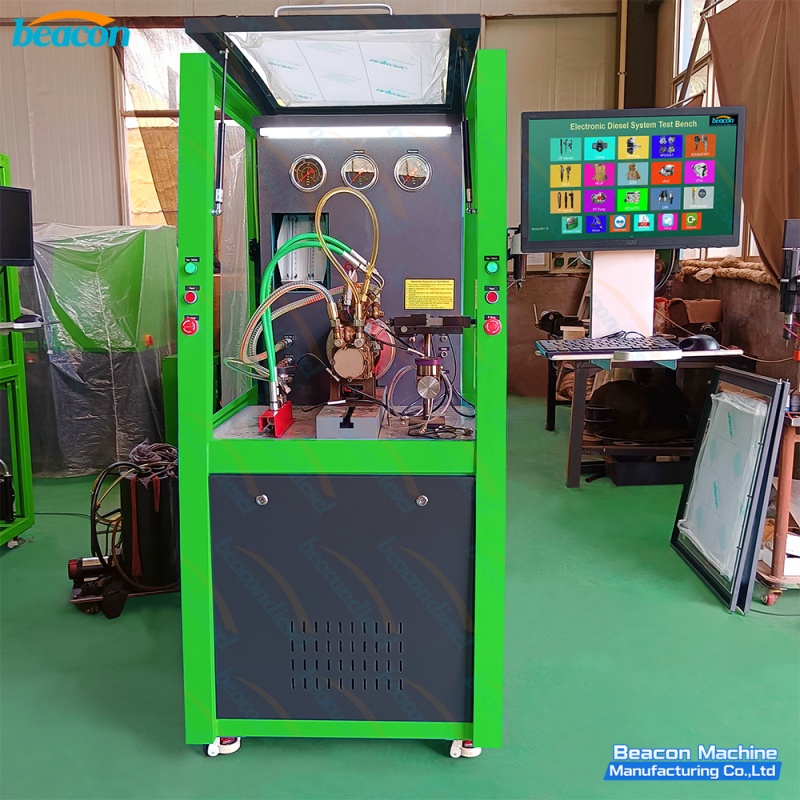
A professional bench like the BEACON CR1019 diagnoses these faults:
- Worn plungers → Low max pressure, slow build-up
- Damaged rollers → Vibration, uneven flow, abnormal noise
- Faulty FMU/PCV → Cannot regulate pressure
- Worn seals → Excessive return flow
- Stuck PRV → Overpressure or no pressure
Pump vs Injector Testing
A faulty CP3 pump can damage injectors and vice versa. Always test both. The CR919 all-in-one bench tests injectors and pumps together for comprehensive diagnostics. For HEUI and EUI/EUP systems, the CR909 test bench is the recommended solution.
Conclusion
Testing a Bosch CP3 pump on a professional test bench is the only reliable way to determine its condition. On-vehicle diagnostics can indicate a problem, but only bench testing measures the exact performance parameters needed to decide repair or replacement. For workshops serving diesel engines with CP3 pumps, investing in a quality common rail test bench pays for itself in diagnostic accuracy and customer confidence.