Language
  EN
EN RU
RU ES
ES DE
DE EL
EL IT
IT JA
JA KO
KO PT
PT ID
ID SR
SR UK
UK VI
VI TH
TH TR
TR MS
MS BE
BE AR
ARCommon Rail Injector Testing: Complete Guide to Diagnosing Bosch Denso Delphi Injectors
Common rail injectors are the heart of modern diesel engines. When they fail, engine performance drops dramatically — rough idle, black smoke, poor fuel economy, and eventually no-start conditions. Knowing how to test them properly can save thousands in diagnostic time and prevent unnecessary replacements.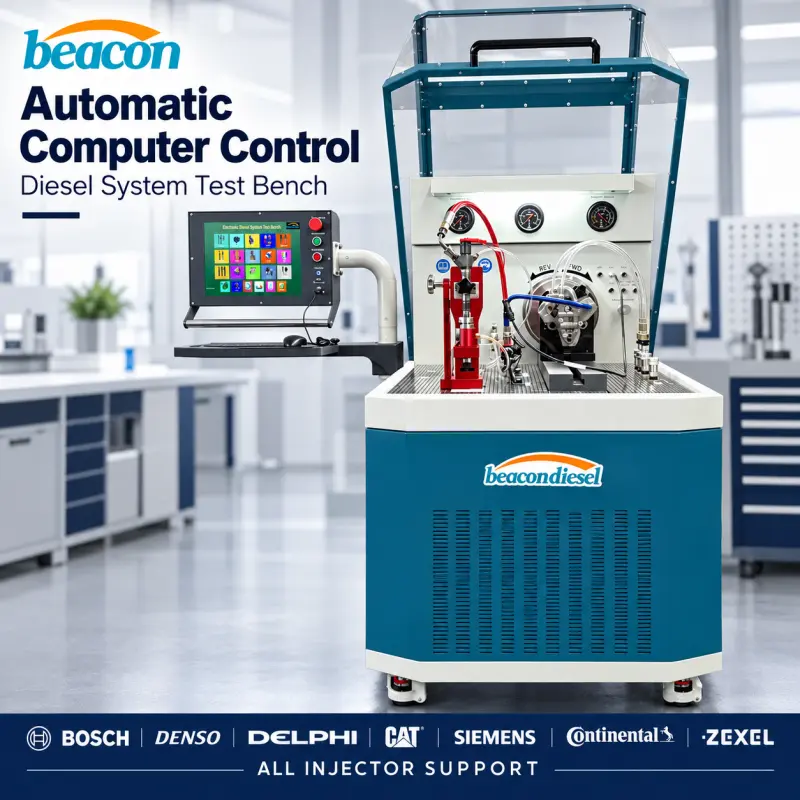
Common Signs of a Failing Common Rail Injector
Before testing, look for these symptoms:
Rough idle or misfire — One or more cylinders not firing correctly
Excessive black smoke — Incomplete combustion due to poor atomization
Increased fuel consumption — Leaking injector dumps fuel into the cylinder
Engine knocking — Abnormal injection timing or quantity
Hard starting or no-start — Insufficient fuel delivery
Oil dilution — Fuel leaking past the injector seals into the engine oil
Three Methods to Test Common Rail Injectors
1. Vehicle-Level Diagnostic Scan
Using a diagnostic scanner, you can read injector-related fault codes and live data. Common codes include P0201-P0206 (injector circuit malfunction) and P0261-P0276 (injector cylinder contribution/balance faults). This tells you which injector is problematic but not always what exactly is wrong.
2. Injector Return Flow Test (On-Vehicle)
A simple test that can identify a faulty injector without removing it. Place graduated cylinders on each injector's return line and measure the amount of fuel returned during idling. An injector that returns significantly more fuel than others has internal leakage and needs attention.
3. Bench Testing on a Common Rail Injector Test Bench
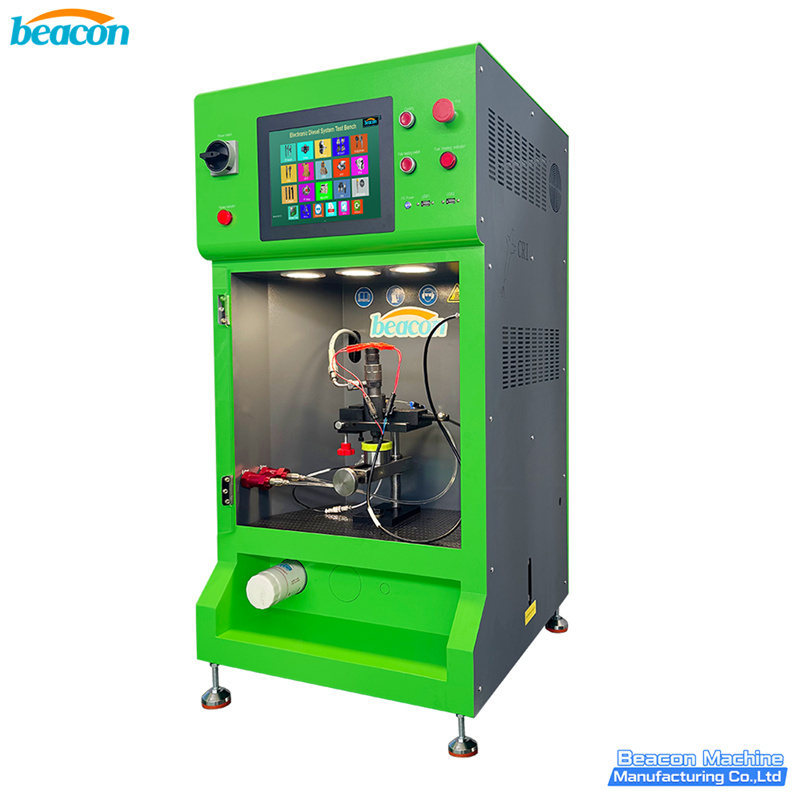
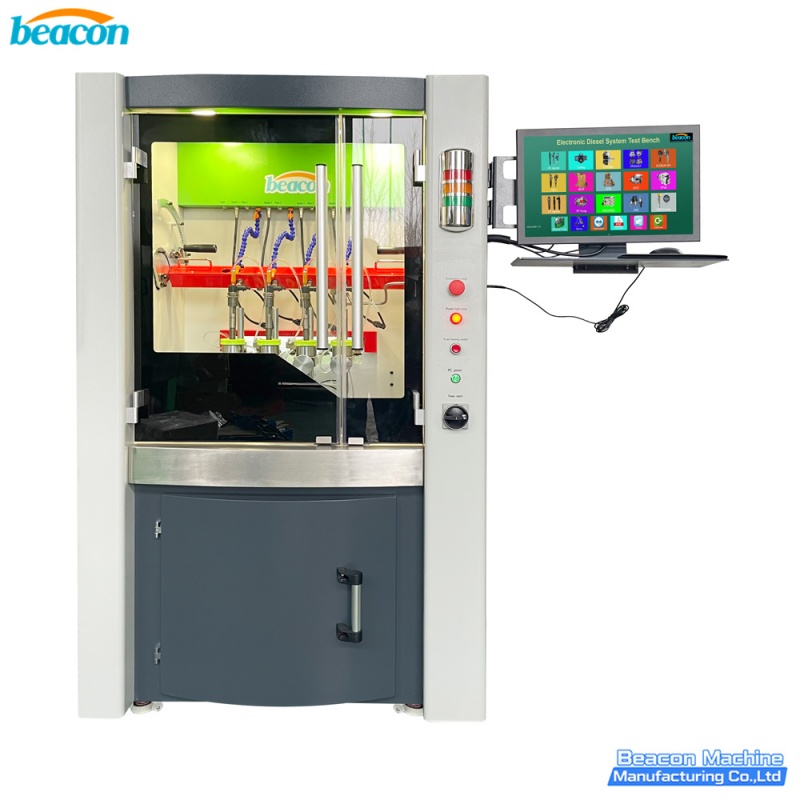
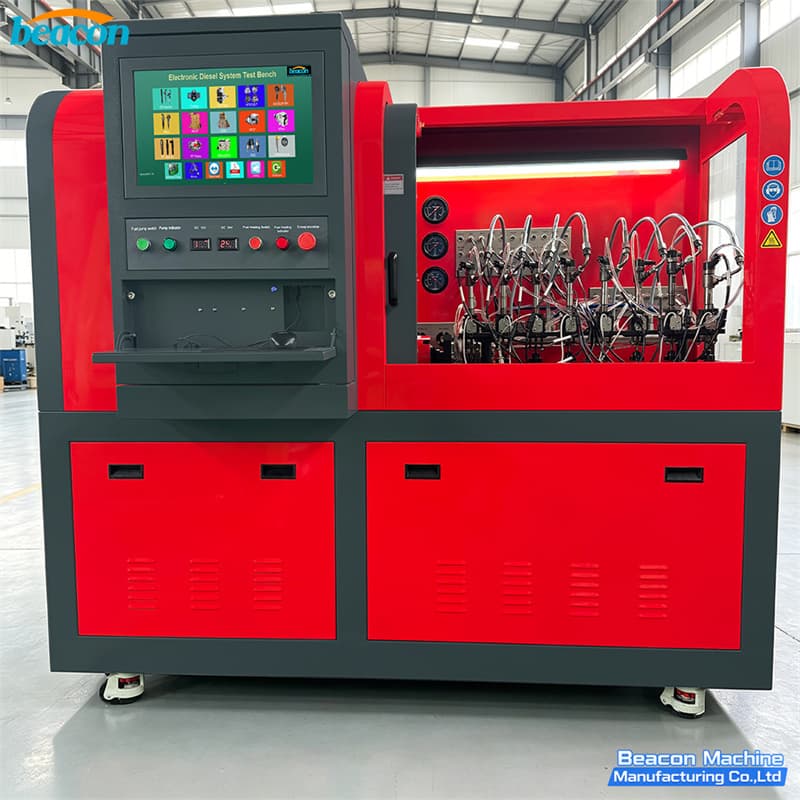
This is the most accurate method. The injector is removed and tested on a specialized test bench like the CR819S or EPS200 from BEACON MACHINE. A professional test bench can measure:
Opening pressure — The pressure at which the injector opens
Injection quantity — Fuel volume delivered per stroke at different engine speeds and loads
Return flow — Internal leakage past the needle valve
Spray pattern — Visual inspection for proper atomization
Solenoid resistance and response time — Electrical health of the injector coil
High-pressure sealing — Whether the injector seals properly under full system pressure
What a Professional Test Bench Can Diagnose
A high-quality common rail test bench can identify these specific faults:
Stuck injector needle — No injection at all, or continuous injection (dribbling)
Worn nozzle holes — Poor spray pattern, reduced atomization
Damaged solenoid coil — Open circuit or short circuit detected through resistance measurement
Internal leakage — Excessive return flow indicates worn sealing surfaces
Spring fatigue — Incorrect opening pressure
Coking/carbon buildup — Restricted flow at the nozzle tip
Common Rail Injector vs EUI vs HEUI — What is the Difference?
Modern diesel engines use three main types of electronically controlled fuel injection systems:
Common Rail (CR) — A high-pressure pump charges a common rail (accumulator) that feeds all injectors. The injectors are electronically controlled solenoid or piezo valves. Used by Bosch, Denso, Delphi, Siemens in most modern engines.
EUI (Electronic Unit Injector) — Each injector has its own pumping element, actuated by the engine camshaft. Used primarily by Cummins and Detroit Diesel.
HEUI (Hydraulically actuated Electronic Unit Injector) — Uses engine oil pressure to amplify injection pressure. Used by Caterpillar, Navistar, and Ford PowerStroke.
A versatile test bench like the CR819S-8 can test all three types, making it a comprehensive diagnostic tool for any modern diesel workshop.
Recommended Frequency of Testing
Preventive maintenance: Every 100,000 km or when engine performance issues appear
After repair: Always test after injector rebuild or replacement
When buying used injectors: Always bench test before installation
Conclusion
Testing common rail injectors on a professional test bench is the only way to be certain of their condition. While on-vehicle return flow tests and diagnostic scans can point to a problem, only bench testing provides the precise measurements needed to decide whether to repair, replace, or reinstall an injector.
For workshops looking to add injector diagnostics to their services, the BEACON MACHINE CR819S and EPS200 series offer professional-grade testing at an affordable investment.