Language
 EN
 RU
 ES
 DE
 EL
 IT
 JA
 KO
 PT
 ID
 SR
 UK
 VI
 TH
 TR
 MS
 BE
 AR
Why Is a 3D Wheel Alignment Machine Essential for Modern Automotive Repair?
Introduction
Wheel alignment is an essential part of modern automotive maintenance. Incorrect wheel alignment can cause uneven tire wear, poor steering response, reduced vehicle stability, and unnecessary maintenance costs. For automotive repair shops and tire service centers, accurate alignment measurements are crucial to delivering reliable service.
A 3D wheel alignment machine uses digital imaging technology to measure wheel positions and angles, helping technicians identify alignment deviations and make adjustments according to vehicle manufacturer specifications.
As vehicle suspension systems become more sophisticated, 3D wheel alignment equipment has become an important investment for workshops seeking greater measurement accuracy, improved workflow efficiency, and professional service capabilities.
1. Why Is Four-Wheel Alignment Necessary?
Four-wheel alignment involves checking and adjusting wheel angles to meet the vehicle manufacturer's specifications. It is not simply a matter of making all four wheels point in the same direction. Each vehicle has specific alignment requirements determined by its suspension design, steering geometry, and intended handling characteristics.
Preventing Premature Tire Wear
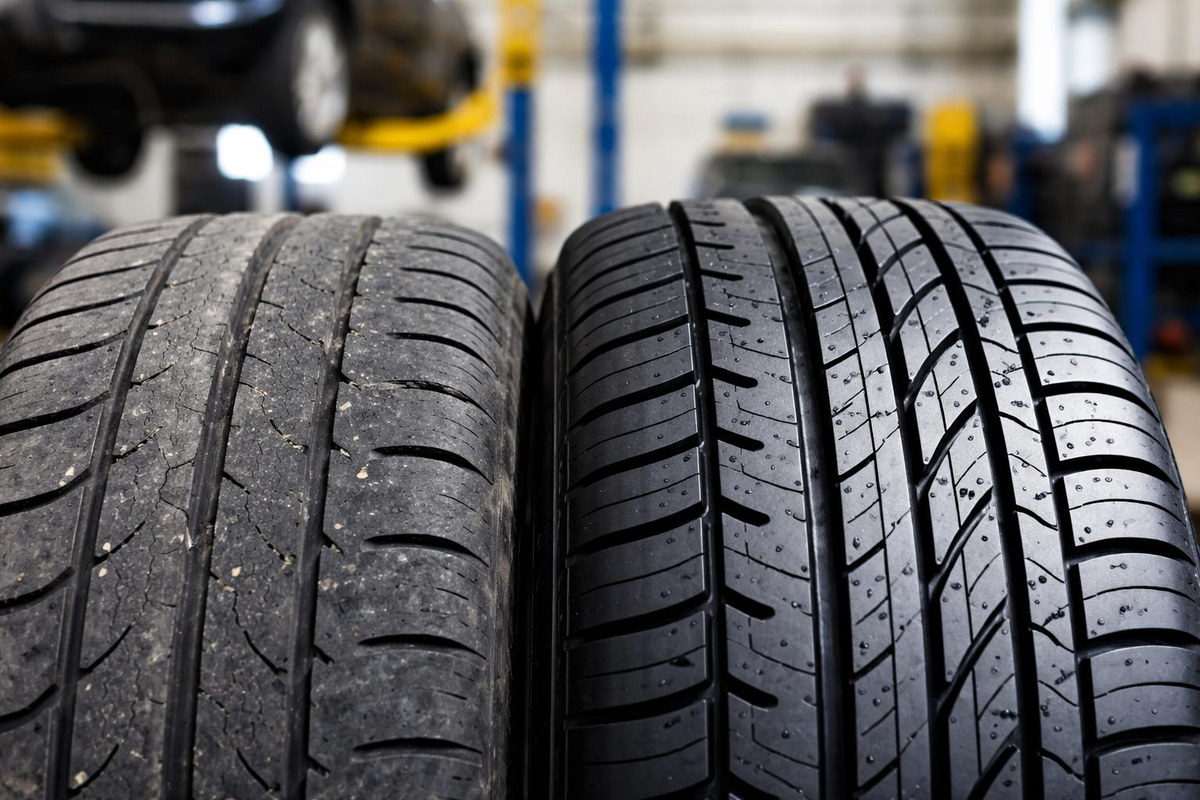
Incorrect alignment can cause excessive wear on the inner or outer edges of tires, as well as feathering and other irregular wear patterns. Tires may need to be replaced earlier than expected, increasing operating costs for vehicle owners and fleet operators.
Michelin identifies uneven tire wear and reduced tire service life as important warning signs of possible alignment problems.
Improving Steering and Vehicle Stability
When wheel angles are outside the specified range, a vehicle may pull to one side, the steering wheel may sit off-center, or the vehicle may respond inconsistently during driving.
Correct alignment helps restore the intended steering characteristics and vehicle handling. However, technicians should also inspect tire condition, suspension components, steering parts, and road conditions before determining the cause of a handling problem.
Supporting Road Safety
Tires are the vehicle's primary contact with the road, making their condition an important safety consideration.
According to the U.S. National Highway Traffic Safety Administration (NHTSA), 511 motor vehicle traffic fatalities occurred in tire-related crashes in 2024. This figure covers tire-related crashes generally and does not mean that wheel misalignment caused those fatalities. It nevertheless highlights the importance of proper tire inspection and maintenance.
Regular alignment checks, together with correct tire pressure and suspension maintenance, can help workshops identify potential problems before they become more serious.
2. How Does a 3D Wheel Alignment Machine Work?
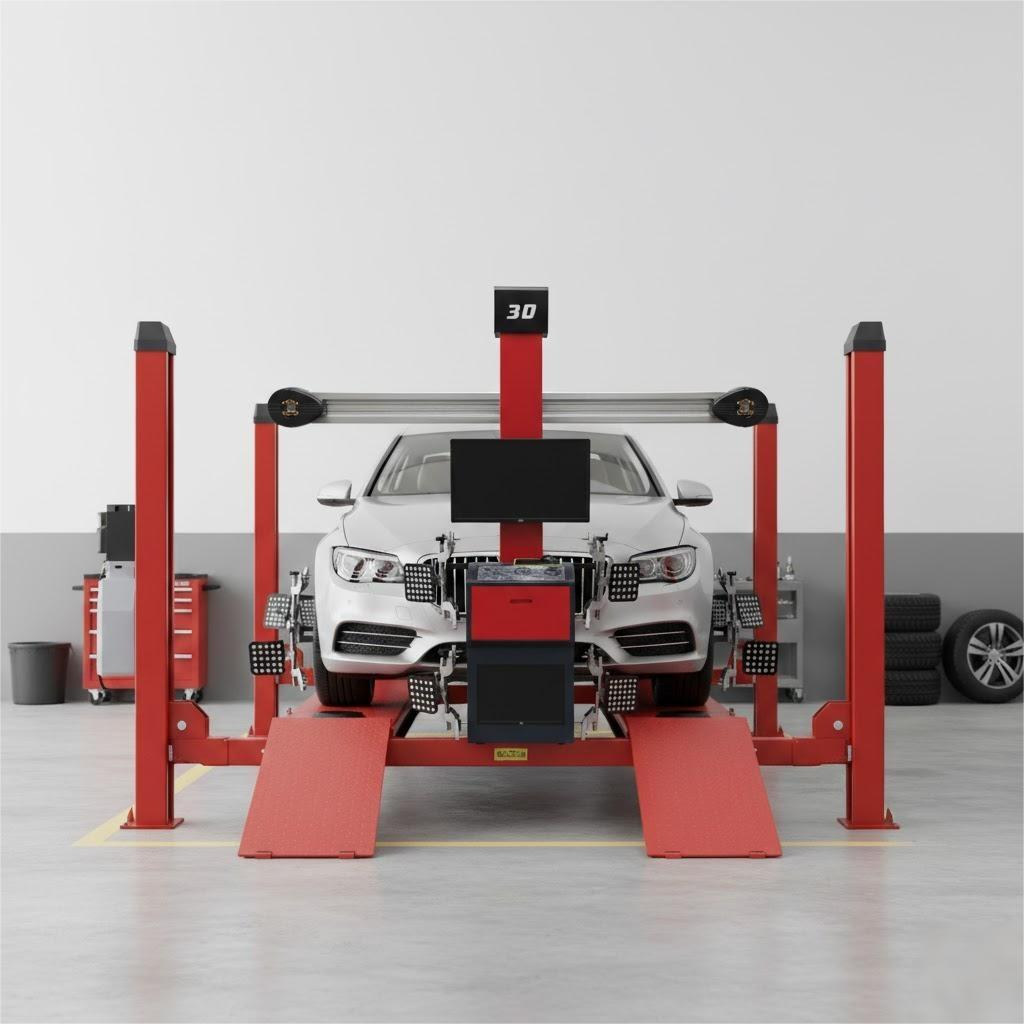
A 3D wheel alignment machine uses cameras, wheel-mounted targets, image-processing software, and vehicle-specific alignment specifications to measure wheel geometry.
Unlike traditional methods that rely heavily on manual measurements, a camera-based 3D system calculates wheel positions from the spatial relationships between the targets and the camera system.
The typical process involves five steps.
Step 1: Vehicle Inspection and Preparation
Before measurement, the technician checks tire pressure, tire condition, wheel bearings, steering components, and suspension parts. The vehicle is positioned on a suitable alignment lift or alignment platform.
The lift and measurement setup must meet the equipment manufacturer's requirements to ensure reliable results.
Step 2: Install the Wheel Targets
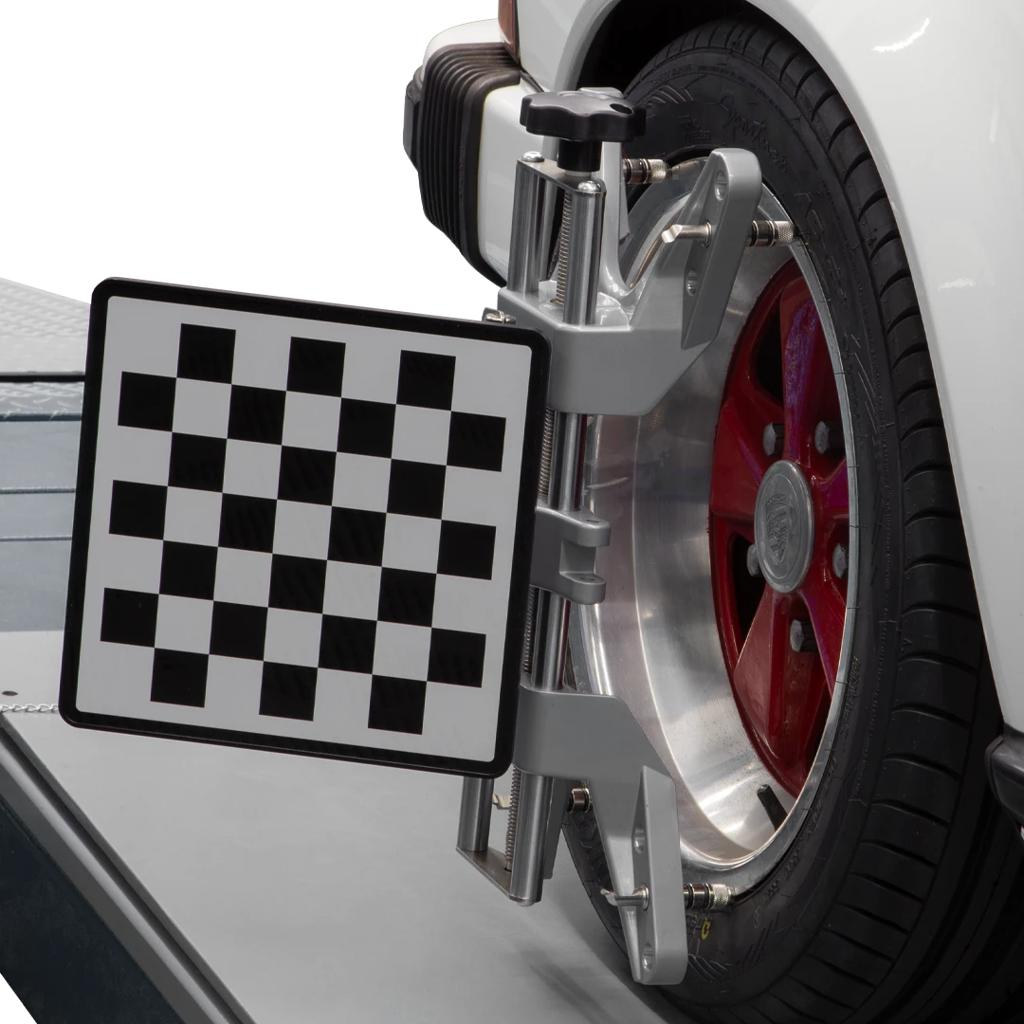
Special targets are attached to the wheels using suitable wheel clamps or adaptors. These targets contain recognizable geometric patterns that the cameras can identify.
Depending on the system design, cameras may be mounted on a fixed structure or an overhead crossbeam.
Step 3: Capture and Calculate Three-Dimensional Data
The cameras capture images of the targets. The software processes their positions and orientations to calculate wheel geometry, including toe, camber, and other supported alignment parameters.
Many modern systems measure all four wheels together, allowing the software to evaluate front-to-rear alignment relationships.
Step 4: Compare Results with Manufacturer Specifications
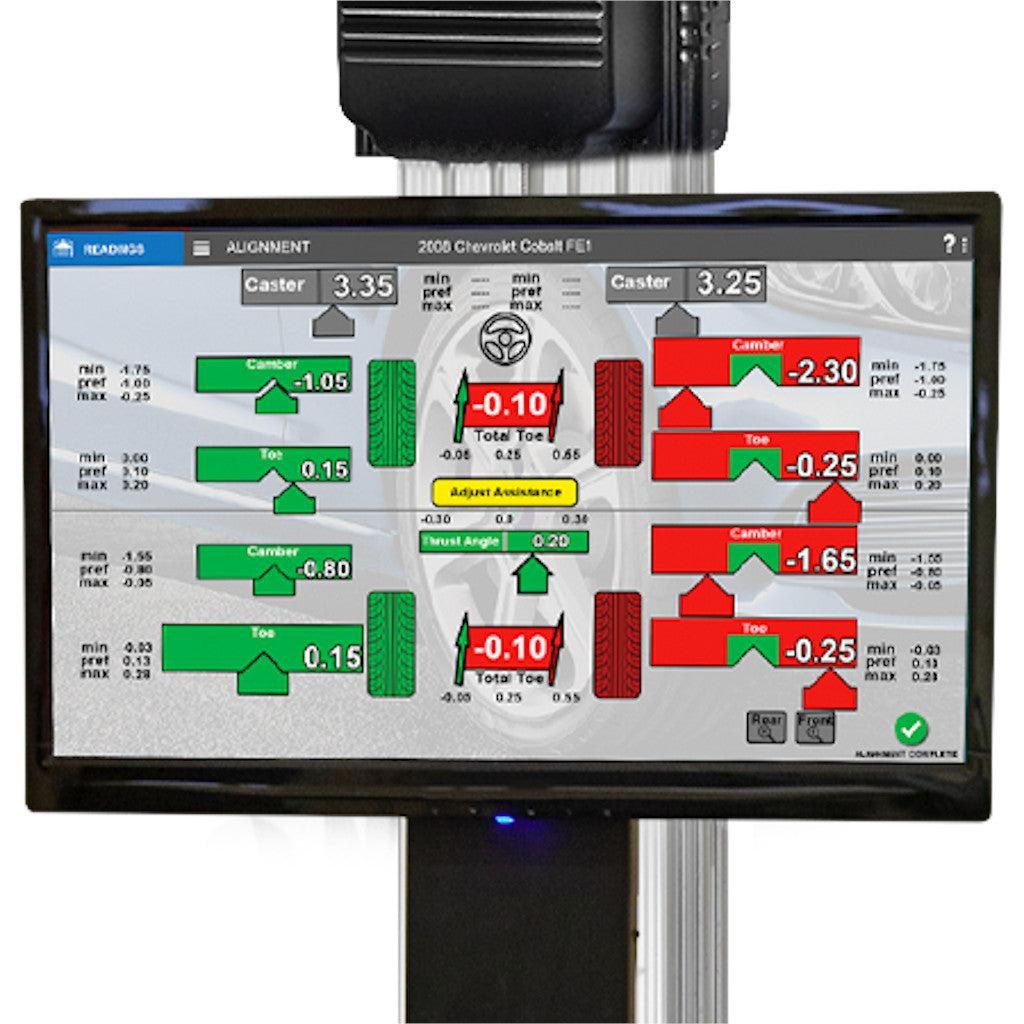
The software compares the measured values with the correct specifications for the selected vehicle make, model, and year.
Results are typically displayed using numerical measurements and color-coded indicators, making it easier for technicians to identify values that fall outside the permitted range.
Step 5: Adjust and Verify
The technician adjusts the relevant steering or suspension components according to the manufacturer's procedures. The system measures the angles again to confirm the final results.
Before-and-after reports can document the measurements and help explain the work performed to customers.
Hunter Engineering's published alignment-system information describes the use of camera sensors and targets to measure the position and orientation of the wheels. Some systems also advertise setup times as short as two minutes, although actual setup and service time depend on the equipment, vehicle, and workshop procedure.
3. What Are the Main Advantages of 3D Wheel Alignment Equipment?
High Measurement Efficiency
Automated image capture and calculation reduce the need for repeated manual measurements. This can streamline workshop procedures, particularly in busy tire service centers.
Clear and Visual Results
Digital displays make it easier to identify alignment deviations. Before-and-after reports also help technicians communicate technical findings to vehicle owners.
More Consistent Diagnostic Procedures
Vehicle-specific specifications and guided software workflows help technicians follow a standardized process. Reliable results still depend on correct vehicle selection, proper setup, equipment calibration, and technician training.
Broader Service Opportunities
A professional 3D wheel alignment system can support routine alignment checks, tire replacement services, suspension repairs, steering-system maintenance, and post-repair inspections.
For workshops, these services can create additional revenue opportunities while improving the overall customer experience.
4. How to Choose the Right 3D Wheel Alignment Machine
Before purchasing a 3D wheel alignment machine, automotive repair businesses should consider several factors:
- Measurement capability: Check which alignment angles the system measures and whether they meet the requirements of the vehicles serviced.
- Vehicle coverage: Confirm compatibility with the relevant passenger cars, SUVs, and light commercial vehicles.
- Software database: Verify vehicle coverage, specification updates, and regional vehicle support.
- Installation requirements: Evaluate lift compatibility, bay dimensions, target clearance, and workshop layout.
- Reporting functions: Look for clear measurement displays and printable before-and-after reports.
- Technical support: Consider installation, operator training, calibration, software updates, and after-sales service.
Equipment selection should be based on the workshop's actual service requirements rather than on the term "3D" alone.
Conclusion
A 3D wheel alignment machine is more than a measurement tool. It helps automotive workshops diagnose alignment problems, support proper tire maintenance, improve service consistency, and provide customers with clearer evidence of repair results.
For repair shops seeking to upgrade their equipment, investing in a suitable 3D wheel alignment system can be a practical step toward more professional and efficient automotive service.
Choosing equipment with appropriate vehicle coverage, reliable measurement technology, and dependable technical support is essential to achieving long-term value.
Recommended Equipment: 3D Wheel Alignment Machine
If your workshop is planning to move to camera-based 3D alignment, the 3D Wheel Alignment Machine from BEACON MACHINE is built for passenger cars, SUVs and light vans.
Two 8-megapixel industrial cameras read the reflective targets clamped to all four wheels at the same time, and the values update continuously while the technician turns the steering wheel or adjusts the tie rod. Measurement accuracy is plus or minus 0.01 degree on total toe, camber, caster and thrust angle, plus or minus 0.02 degree on kingpin inclination and maximum steering angle, and plus or minus 2 mm on track width and wheelbase.
The multilingual operation interface covers the main workshop languages, and the built-in vehicle specification database loads factory reference data as soon as a vehicle is selected, together with a coverage check that shows whether the selected vehicle and the installed software version are supported.
The whole unit is built on a mobile cabinet with four swivel casters, so one machine can serve several alignment bays in the same workshop. It is delivered complete with two turnplates, two turnplate transition blocks, two wheel chocks, brake pedal depressor, steering wheel holder, four wheel clamps with targets, a 22-inch monitor, keyboard and mouse.
- Two 8-megapixel industrial cameras, four wheels measured simultaneously
- Accuracy plus or minus 0.01 degree on toe, camber, caster and thrust angle
- Multilingual interface and built-in vehicle specification database with coverage check
- Mobile cabinet on four swivel casters, one machine serving several alignment bays
- Complete delivery with turnplates, wheel clamps with targets, 22-inch monitor, keyboard and mouse
See the full specifications and the complete configuration on the product page.