Language
 EN
 RU
 ES
 DE
 EL
 IT
 JA
 KO
 PT
 ID
 SR
 UK
 VI
 TH
 TR
 MS
 BE
 AR
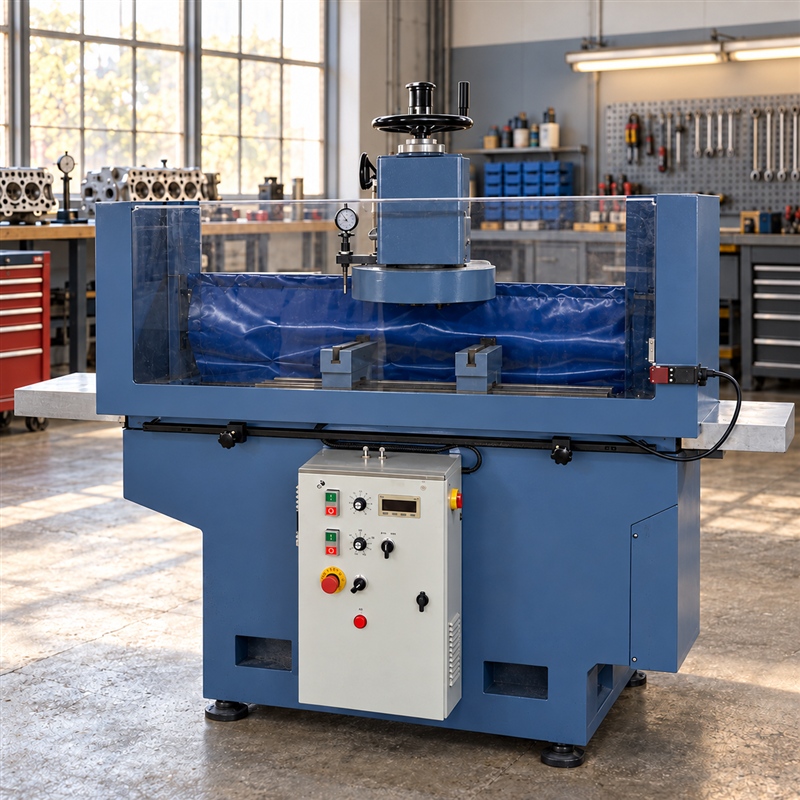
Cylinder Head Resurfacing Machine for Cars and Light Trucks
Details
What a Cylinder Head Resurfacing Machine Is For
A cylinder head takes the highest thermal load in an engine. Overheating, a failed gasket, a bad coolant change or a head bolt torqued in the wrong sequence all warp the deck face until it no longer sits flat against the block. Once that happens the head gasket cannot seal, combustion gas escapes into the coolant, and the head usually comes off for machining instead of being replaced.
A cylinder head resurfacing machine re-machines that mating face by grinding or milling it flat again, and in the same pass can dress other flat surfaces such as the cam carrier side, the intake or exhaust manifold faces and the transmission bell housing face, using dedicated fixtures. The result is a head that goes back on the engine with a new gasket instead of a new head on the invoice. The same principle applies to engine blocks: the deck surface and the main bearing saddle faces are resurfaced the same way.
Cylinder Heads This Machine Covers
The working envelope is built around the workpiece sizes that come out of passenger cars and light commercial vehicles. The 850 mm maximum workpiece length and 330 mm maximum workpiece width take the full length of most four-cylinder and inline six-cylinder heads used in cars, SUVs, minivans and light vans, and the 160 mm to 440 mm workpiece height range takes everything from small petrol heads to taller diesel heads once the fixture is set up for them.
Japanese engines
Inline four-cylinder petrol heads from Toyota, Honda and Nissan, transverse layouts included, generally fall inside 850 x 330 mm. Straight-four and straight-six heads from these makers sit at the upper end of the length range but remain within the table travel. Note that Toyota 2JZ and Nissan VG-series heads for performance and drift applications are taller and heavier than the passenger-car range; measure the head and confirm with us before quoting a fixture for them.
German and European engines
Four-cylinder heads from Volkswagen, Audi, BMW, Mercedes-Benz, Peugeot, Renault and Fiat, and the inline six-cylinder heads used in BMW, Mercedes-Benz and Audi models, are within the envelope for most applications. The tall aluminium alloy heads used in Audi and Volkswagen V6 and V8 applications are the borderline case, and the V8 heads used in Mercedes-Benz M113 and M156 applications exceed the width and weight range of this machine class. Confirm those with us.
American engines
Four-cylinder heads from Chevrolet, Chrysler, Ford and Dodge, and the V6 heads from Chevrolet, Ford, Dodge and Chrysler, generally fit. Big-block V8 heads from Chevrolet, Ford and Chrysler are too wide and too tall for this size of machine and require the larger 1300 mm or 1500 mm class equipment. Some V6 diesel heads from Ford 7.3 and 6.0 Power Stroke and Duramax, and from Cummins 5.9 and 6.0 applications, fit by length but need a dedicated fixture and should be confirmed by measurement.
Korean engines
Four-cylinder petrol heads from Hyundai and Kia, including the newer Gamma and Theta families, fit inside the envelope. The Hyundai-Kia Lambda 3.3 and 3.8 V6 heads are larger and need measurement before a fixture is committed.
Chinese domestic engines
Four-cylinder heads from Geely, Chery, Changan, BYD, Great Wall, Haval, Dongfeng, FAW and Lifan, including the turbocharged small-displacement petrol and diesel engines common in these vehicles, fit comfortably. Larger six-cylinder and V6 heads from Chery, Geely and BYD should be measured first.
Diesel and commercial engines
Four-cylinder light commercial diesel heads from Ford Transit, Renault Master, Peugeot Boxer, Fiat Ducato, Mercedes-Benz Sprinter and the Isuzu, JMC, Jiangling and Foton light trucks fit by dimension. The head on a heavy truck straight-six or V8 is outside this class of machine and belongs on 1300 mm and larger equipment.
What Is Explicitly Outside This Machine
We would rather tell you before you buy than after. Heavy truck and bus V8 and V12 heads, marine engine heads, industrial and construction machinery heads, large stationary engine heads and long V-configuration cylinder blocks are beyond the 850 mm by 330 mm envelope of this machine. They need the 1300 mm or 1500 mm class resurfacer, or a fixture set we have not built. Tell us the engine and we will say so directly.
Industries That Use Cylinder Head Resurfacing Equipment
Independent garages and quick-fit chains. A warped head that would otherwise be replaced becomes a resurfaced head with a gasket, at a fraction of the part cost. For a shop doing several head jobs a week this is usually the fastest payback machine in the workshop.
Engine rebuilding and reconditioning shops. This is the core market. A specialist rebuilder takes a customer head, strips it, machines the mating faces, measures the result and reassembles with new gaskets, seals and head bolts. The machine is the centre of that workflow.
Dealer and authorised service workshops. Where a head can be resurfaced to specification rather than replaced, the parts cost saving on one head can pay for the machine many times over.
Heavy vehicle and truck maintenance depots. Light commercial van and light truck heads pass through these workshops every week, and light-duty diesel heads are a reliable workload for a machine of this size.
Diesel injection and pump service centres. A head is already off the engine for injector, nozzle or pump work, so resurfacing the deck while it is open is the natural time to do it.
Machining and jobbing workshops. Flat-surface grinding and milling is useful well beyond cylinder heads: flywheel faces, brake disc blanks, pump and gearbox housings, valve bodies and general cast iron and aluminium parts that need a true machined face.
Contractors, racing and motorsport teams. Race engines are rebuilt repeatedly and cylinder heads are machined each time. It also serves as a useful measuring and setup station.
Agricultural, construction and mining machinery maintenance. Small engines and light equipment are serviced in general workshops that also handle these machines.
Engine remanufacturing and recycling plants. Heads recovered from written-off vehicles are sorted, machined and resold as serviceable parts, which makes the machine a production asset rather than a repair tool.
Technical colleges and training centres. Cylinder head resurfacing is a standard curriculum item in automotive engineering and motor vehicle repair programmes, and a machine of this size is the right bench for teaching flat-surface machining and measurement.
Marine and small engine service. Outboard and small marine engine heads fit comfortably, while larger marine diesel heads need the bigger machine class.
How the Machine Works
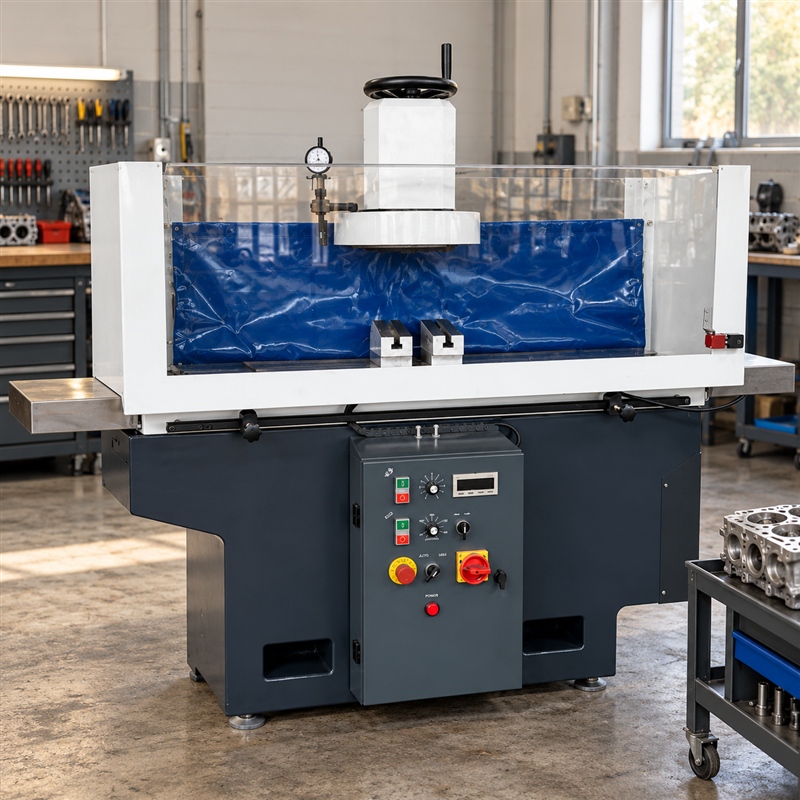
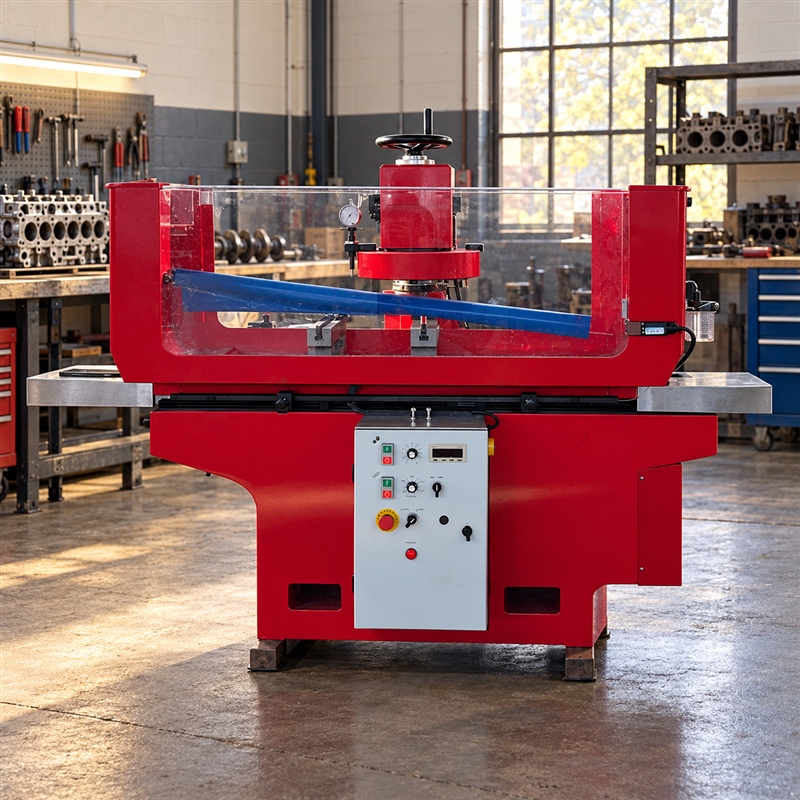
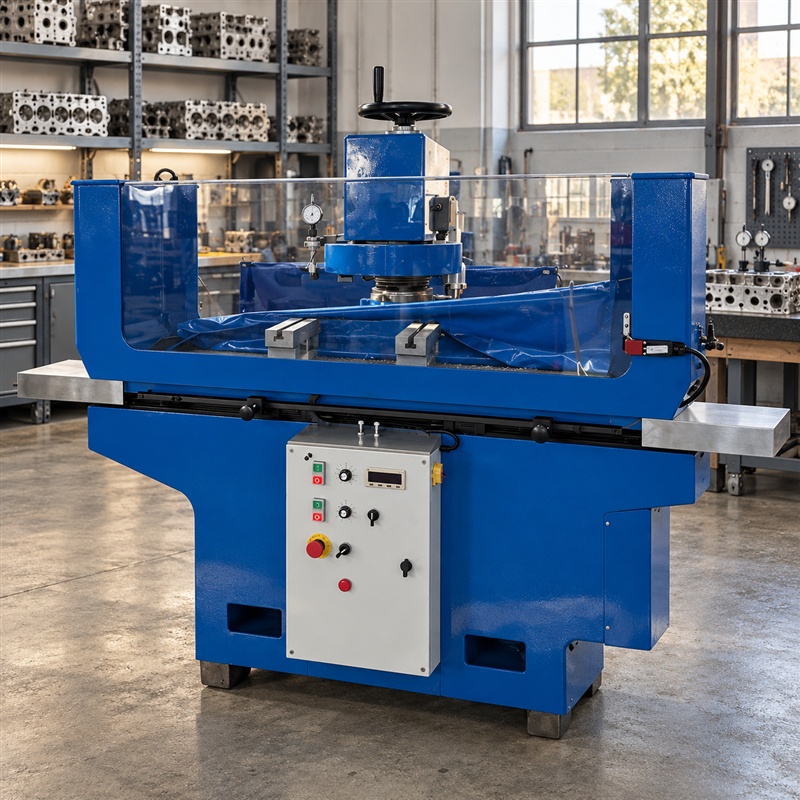
The cylinder head or engine block is clamped on the table in a dedicated fixture. The vertical milling or grinding head is brought down onto the mating surface, and the table is fed forward at a controlled rate while the head rotates at the set speed. With a CBN or PCD insert the cut removes material quickly and leaves a surface that a new head gasket can seal against directly, without hand scraping or lapping on most jobs. Depth of cut is set by the handwheel, and the dial gauge mounted on the head gives the operator a direct read of the surface as it is machined.
The same machine, with different fixtures, handles the other flat faces of the head: the cam carrier face, the intake and exhaust manifold faces, the thermostat housing face and the transmission face. Fixtures for specific head families can be specified when the machine is ordered.
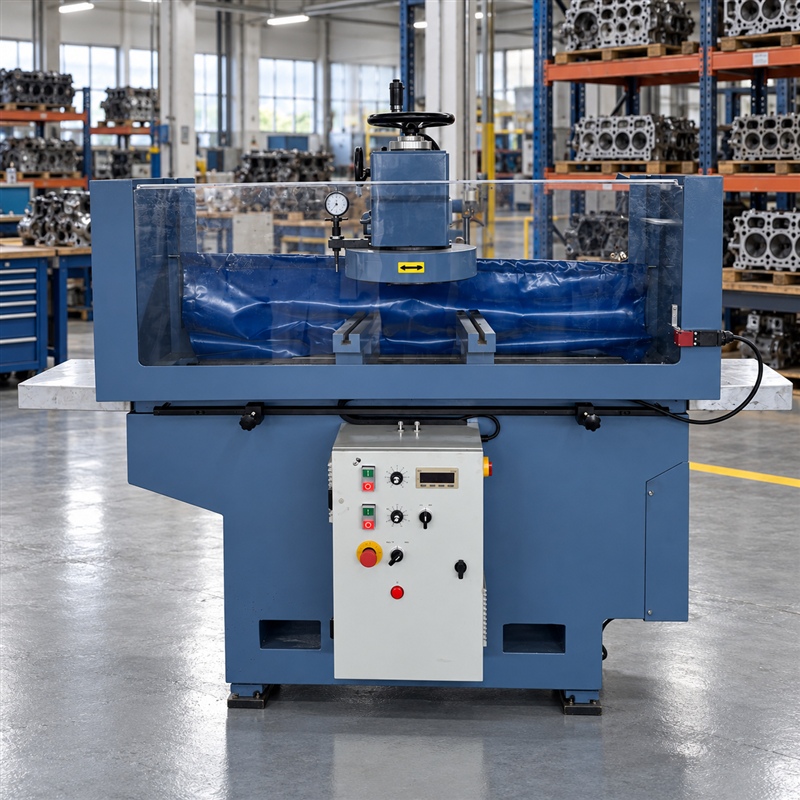
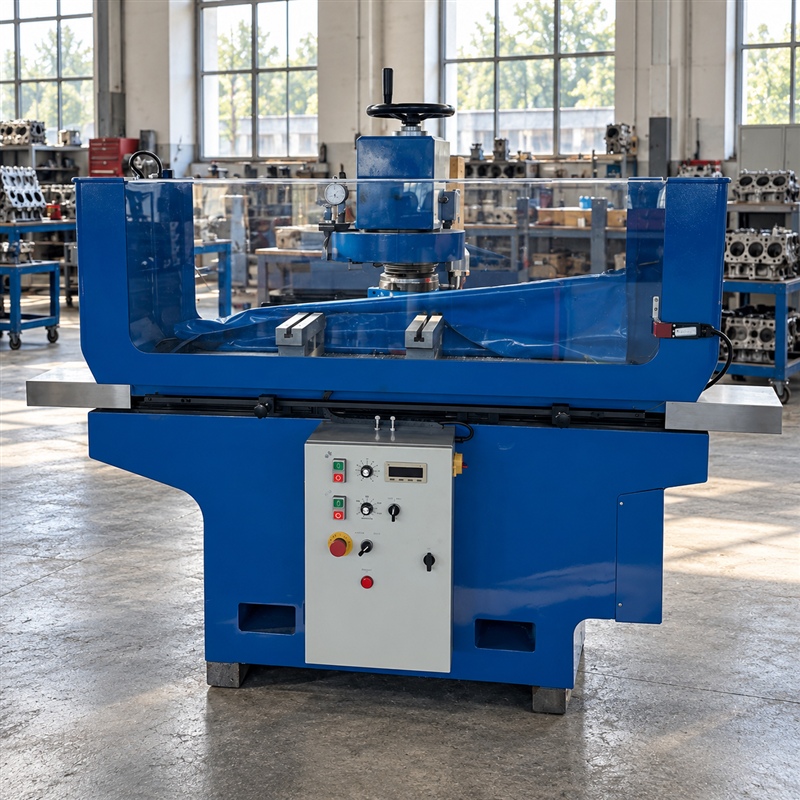
Cylinder Head Resurfacing Machine for Cars and Light Trucks Advantage
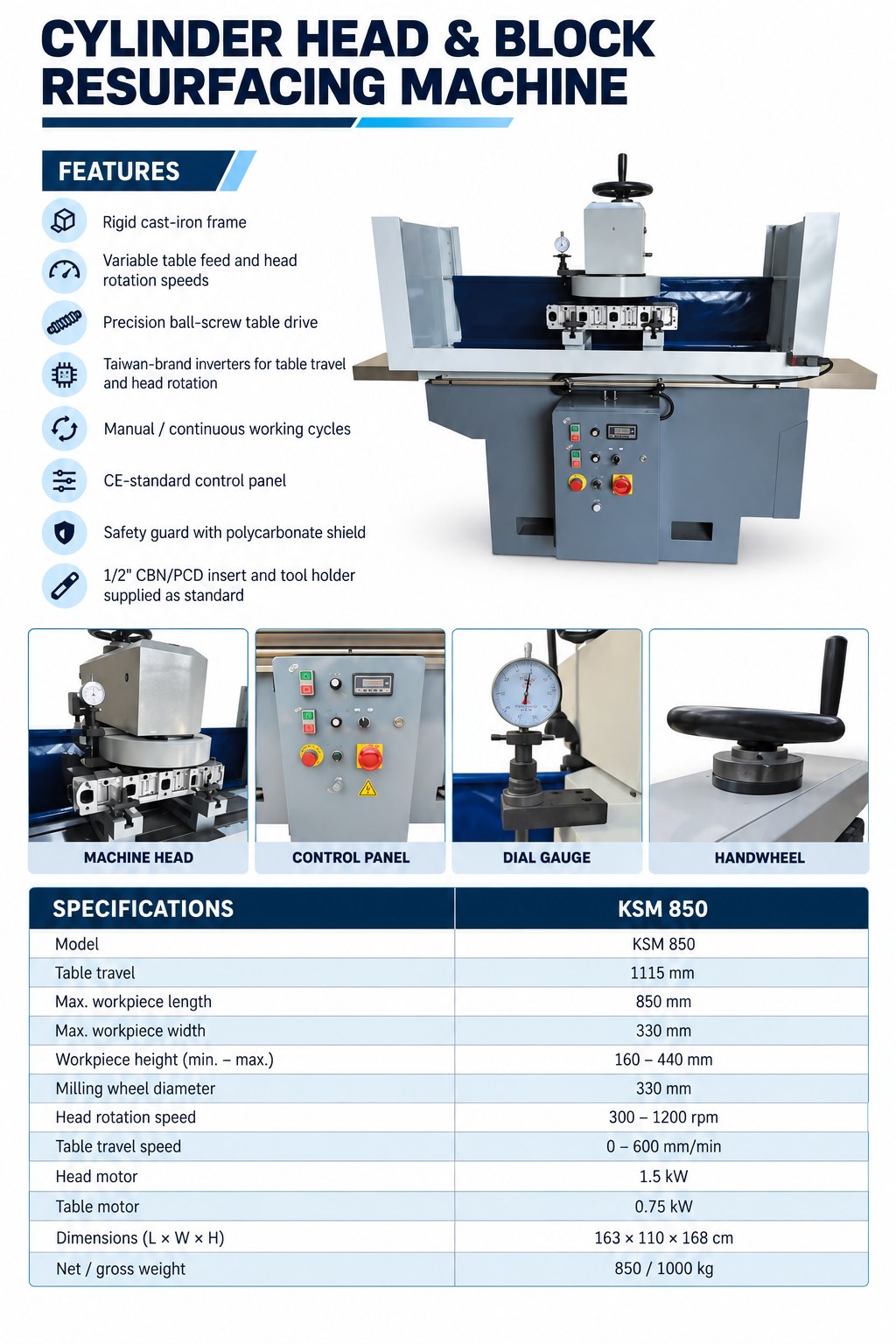
1. Rigid cast-iron frame keeps the table and head in alignment under the side load of a heavy cylinder head, so the finished mating face stays flat over the full 850 mm capacity.
2. Variable table feed from 0 to 600 mm/min and head rotation from 300 to 1200 rpm let the operator match the cut to aluminium, cast iron or steel heads instead of running one fixed speed.
3. Precision ball-screw table drive and Taiwan-brand inverters for both table travel and head rotation give repeatable feed rates job after job.
4. Manual or continuous working cycles cover single-head jobs on a bench and batch work when a workshop is clearing a shelf of customer heads.
5. CE-standard control panel and a polycarbonate safety guard around the cutter keep the operator behind the shield while coolant and swarf are being thrown.
6. Supplied as standard with a 1/2 inch CBN/PCD insert and matching tool holder, so the machine can start cutting without ordering a separate tooling package.
parameter
| Item | Value |
| Model | KSM 850 |
| Table travel | 1115 mm |
| Max. workpiece length | 850 mm |
| Max. workpiece width | 330 mm |
| Workpiece height (min. - max.) | 160 - 440 mm |
| Milling wheel diameter | 330 mm |
| Head rotation speed | 300 - 1200 rpm |
| Table travel speed | 0 - 600 mm/min |
| Head motor | 1.5 kW |
| Table motor | 0.75 kW |
| Dimensions (L x W x H) | 163 x 110 x 168 cm |
| Net / gross weight | 850 / 1000 kg |
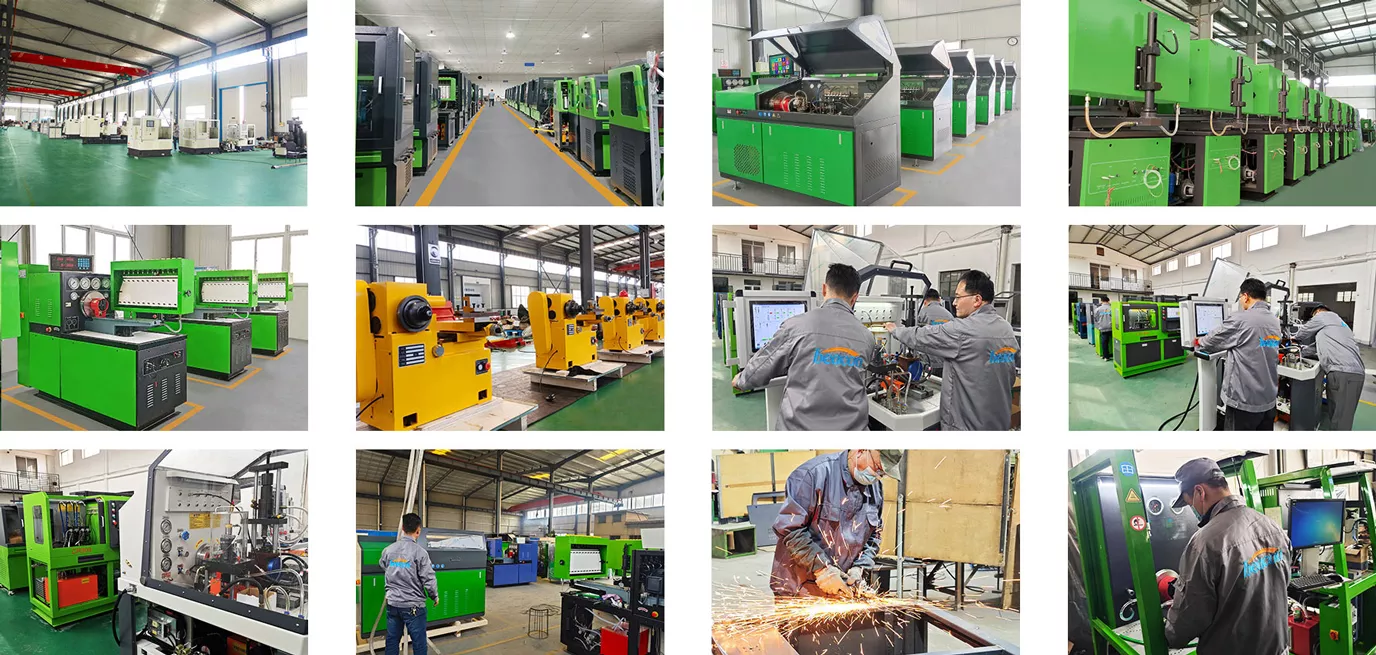
Our factory
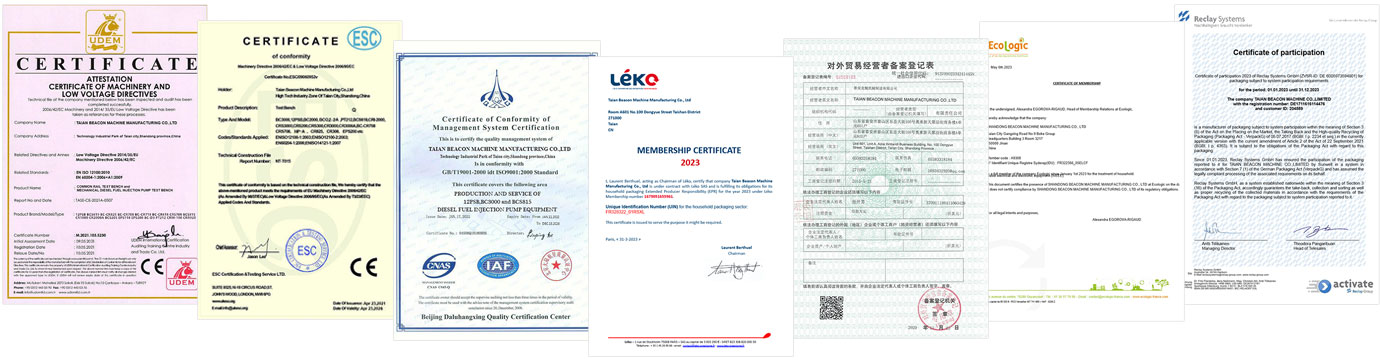
Certification
Our Customers

VIEWS:638 Times
RELATED PRODUCTS