Language
  EN
EN RU
RU ES
ES DE
DE EL
EL IT
IT JA
JA KO
KO PT
PT ID
ID SR
SR UK
UK VI
VI TH
TH TR
TR MS
MS BE
BE AR
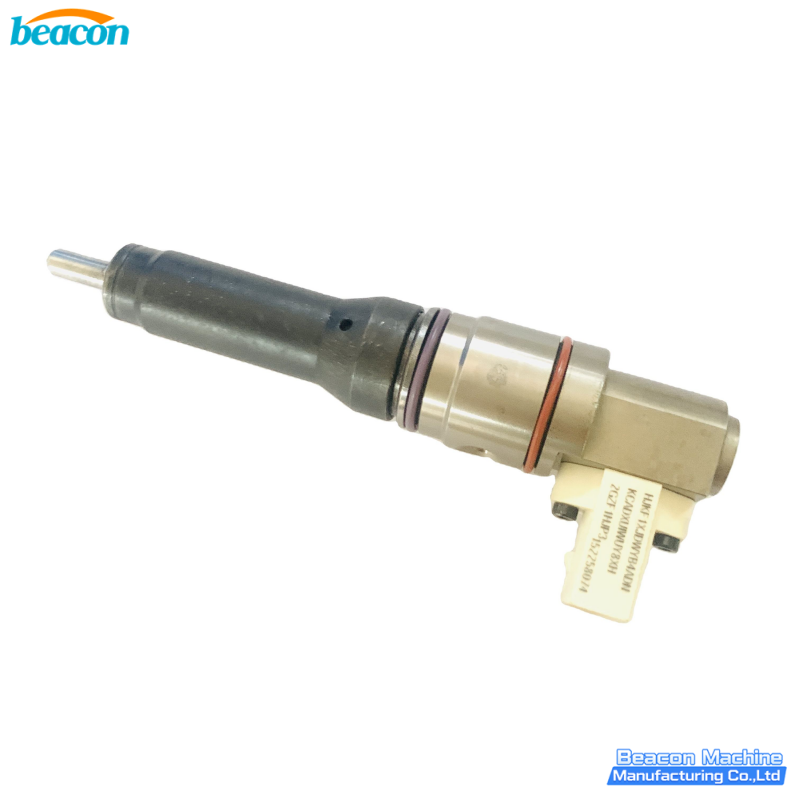
ARDAF XF106 Smart Injector 2005596 BEBJ1D02001 — Delphi Common Rail EUI for Paccar MX13 Euro 6 / EPA13
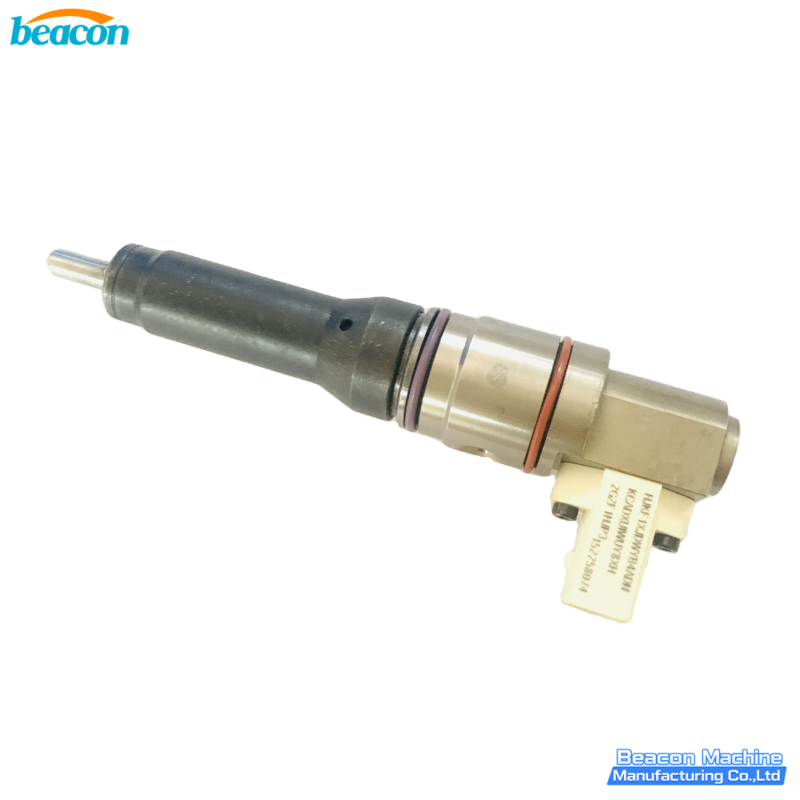
DAF XF106 Smart Injector 2005596 BEBJ1D02001 — Delphi Common Rail EUI for Paccar MX13 Euro 6 / EPA13
The DAF XF106 launched in 2013 as the second generation of the XF series, paired with the Paccar MX13 12.9-litre inline-six diesel in Euro 6 trim (and a parallel EPA13 variant for North American export markets under the same Paccar engine family). The injector that sits in each of the six cylinder heads is not a Bosch CRI piezo and not a conventional solenoid CRI2 — it is a Delphi Electronic Unit Injector (EUI), part number 2005596 on the DAF parts list and BEBJ1D02001 on the Delphi manufacturer side. Workshop counters across Europe, Russia, the CIS, the Middle East, North Africa and Latin America see this part on the bench every week, and the failure modes are quite different from anything the previous Euro 5 MX platform showed.
This guide walks through what the BEBJ1D02001 is, how it is built, where it tends to fail, what the truck tells you when it does, the special tools the job needs, and which BEACON MACHINE test bench is the right answer for a workshop that services XF106 / CF / LF with the MX13 powerplant. If you service DAF trucks fitted with the MX13 engine — fleet or independent — read on. If you only know the older Delphi EUI numbers from MX11 / MX13 Euro 5 service, pay attention: the iEPC control valve, the injector bore sealing, and the diagnostic logic all changed when the platform moved to Euro 6.
Part Numbers and What They Mean
| Reference | Number | Source |
|---|---|---|
| DAF OE part number | 2005596 | DAF Trucks N.V. parts catalogue (XF106 / CF series, MX13 Euro 6) |
| Delphi manufacturer part number (MPN) | BEBJ1D02001 | Delphi Technologies product labelling |
| Common aftermarket cross-reference (Bosch rebuild) | 0445110081 | Aftermarket rebuild listings — DAF dealers and reman suppliers |
| Predecessor on MX13 Euro 5 (6MY15) build | BEBJ1D00002 | Earlier Paccar MX13 EU5 calibration; not interchangeable on EU6 |
| Engine family | Paccar MX13 12.9L inline-6 | Paccar engine catalogue |
| Application label on part | F2P EU6 / F2P MX13 EPA13 DAF106 | Delphi shipping mark — "Fits to Paccar, Euro 6 application, MX13 platform, EPA13 spec, DAF XF106 vehicle" |
The two numbers tell different stories. 2005596 is the number the DAF dealer punches into the parts screen when you order a replacement. BEBJ1D02001 is what is laser-etched onto the injector body itself, and is what you read when the injector is on the bench with the DAF sticker removed. Both refer to the same physical part, but the cross-reference matters: a rebuild shop quoting the Bosch rebuild number 0445110081 is selling an aftermarket remanufactured equivalent, not a factory-new Delphi. Workshops that need factory-new spec — for example, when the ECU has stored a per-cylinder correction factor that has drifted out of range — should insist on the Delphi BEBJ1D02001.
Vehicle and Engine Coverage
| Truck Model | Engine | Emission Level | Injector | Common Reference |
|---|---|---|---|---|
| DAF XF106 (2nd generation XF, 2013+) | Paccar MX13 12.9L | Euro 6 | Delphi EUI / BEBJ1D02001 | 2005596 |
| DAF CF (MX13 power, 2013+) | Paccar MX13 12.9L | Euro 6 | Delphi EUI / BEBJ1D02001 | 2005596 (shared with XF) |
| DAF XF106 (EPA13 export spec) | Paccar MX13 12.9L | EPA 2013 (US/Canada) | Delphi EUI / BEBJ1D02001 | 2005596 (same part, different calibration) |
| DAF LF / CF (smaller displacement) | Paccar MX11 10.8L | Euro 6 | Different Delphi EUI (BEBJxA series) | Not interchangeable — different part |
| Older DAF XF105 (Euro 5, 2006–2013) | Paccar MX13 12.9L Euro 5 | Euro 5 | Delphi EUI / BEBJ1D00002 | Earlier calibration — not interchangeable |
| Kenworth T880 / Peterbilt 579 (NA) | Paccar MX13 12.9L | EPA13 | Delphi EUI / BEBJ1D02001 | Same Delphi part, Kenworth/Peterbilt OE different |
The BEBJ1D02001 is the Euro 6 / EPA13 calibration of the Delphi EUI for the MX13 platform. The Euro 5 version on the earlier MX13 used a different control valve calibration and is not a drop-in replacement — fitting the EU6 injector to an EU5 engine will fail emissions, and fitting the EU5 injector to an EU6 engine will trigger limp-home mode on cold start. The Kenworth T880 and Peterbilt 579 in EPA13 spec use the same Delphi part under a different OE label, which is why Pacific Northwest rebuild shops see this part on the bench alongside the DAF market.
Inside the BEBJ1D02001 — Component Breakdown
The Delphi EUI is a tightly integrated hydraulic assembly. Unlike a Bosch CRI2 or a Denso G2, the high-pressure generation and the spray event are split: a separate high-pressure pump on the engine builds rail pressure, and the EUI itself is purely an electrically-controlled metering and spraying valve. Each part inside the injector plays a specific role in the spray event, and each part is a potential wear point. From the combustion chamber end up, the main components are:
- Nozzle (spray tip): Multi-hole precision-drilled steel nozzle, with a needle valve that opens and closes against a hardened seat. The MX13 injector is typically a 7-hole design at the spray angles matched to the MX13 piston bowl. Hole diameter is in the 100–150 micron range; even minor carbon build-up or erosion changes the spray pattern and the air-fuel mixing in the bowl.
- Nozzle nut (nozzle retaining nut): The hex nut that clamps the nozzle assembly to the injector body. Torqued to spec during manufacture; repeated disassembly without a proper holder damages the threads and distorts the needle lift.
- Nozzle spring and shim(s): Sets the needle opening pressure. Stack height of the shim pack determines NOP. A shim that has been re-installed on the wrong side after cleaning changes opening pressure enough to alter injection timing and the ECU's per-cylinder correction map.
- Injector body: Houses the high-pressure fuel gallery, the iEPC (intelligent Electronic Pressure Control) valve, and the lower solenoid assembly. The iEPC valve is what translates the solenoid pulse into needle lift; wear or carbon contamination here causes the classic "no fault code, but rough idle" symptom.
- iEPC control valve: The Delphi-specific intelligent pressure control valve. This is the part that makes the BEBJ1D02001 different from older Delphi EUI generations — it uses closed-loop pressure feedback to trim injection quantity on a per-event basis, which is what enables the multiple-injection Euro 6 strategy.
- Solenoid coil (2-pin): Energised by the ECU to trigger the injection event. Coil resistance is typically in the low-ohm range; insulation resistance should be > 100 MΩ. A coil with low insulation is the most common electrical failure on a high-mileage EUI.
- High-pressure inlet and copper sealing washer: The fuel inlet from the high-pressure rail, sealed with a soft copper washer that must be replaced every time the injector is removed. Reusing a compressed copper washer is the most common cause of a cylinder-head fuel leak on reassembly.
- Leak-off ports and O-rings: Two O-rings (one top, one bottom) seal the injector in the cylinder head. The top O-ring is the high-pressure seal; the bottom O-ring is the lower sealing. The leak-off (return) gallery carries spill fuel back to the tank. A third O-ring (the body-to-rail O-ring) is on the high-pressure connector.
- Electrical connector (2-pin Delphi Metri-Pack): The plug that mates with the engine harness. Sealed against water ingress; a damaged connector or corroded pin will set injector circuit codes even on a mechanically perfect injector.
Each of these parts has a specific failure mode, and the test procedure differs by which part has failed. A bench test that only measures flow at a single pressure point — common on the most basic testers — will miss most of the early-stage problems. You need a tester that measures: full-load flow at 1,600–2,000 bar, idle flow at 250–300 bar, pilot and main injection volumes separately, return fuel volume, response time on the solenoid pulse, and — for the Delphi EUI specifically — the iEPC control valve response curve. That is exactly what the BEACON CR1017 and CR1029 do, with the Beijing system database behind them covering the full Delphi EUI family including the BEBJ1D02001.
Common Failure Points and What the Truck Tells You
DAF XF106 trucks spend their life at high load on motorway routes — the XF is DAF's flagship long-haul tractor. The Delphi EUI in the MX13 engine has a typical service life of 250,000–350,000 km before overhaul is needed, but specific failure modes appear much earlier depending on fuel quality, oil change intervals, and short-trip urban duty. Here are the failure modes BEACON MACHINE sees most often in customer returns.
1. Nozzle carbon build-up and hole erosion. This is the most common complaint. The truck shows rough idle, white smoke on cold start, and a 5–15% power loss at full load. On the bench, the injector passes full-load flow but fails the idle flow test — the needle is sluggish because the nozzle seat is glazed with carbon. Cleaning the nozzle with ultrasonic bath and lapping the seat is the right repair; replacing the nozzle assembly is the alternative for severely eroded parts. The fault code is typically P0300 (random misfire) or a P030x single-cylinder misfire, not a flow code. The ECU sees the cylinder as electrically healthy and mechanically firing, but the spray pattern is wrong.
2. iEPC control valve wear or carbon contamination. The XF106 shows a long crank time (4–7 seconds) on cold start, and at idle the engine hunts 30–50 rpm. No diagnostic trouble code is stored, because the ECU sees the injector as electrically healthy. The iEPC valve regulates the pilot oil that opens the needle; when its bore is worn or its screen is contaminated with carbon, the pilot oil leaks and the needle does not lift cleanly. The bench test shows low pilot volume and a sluggish response curve. This injector cannot be repaired by cleaning alone — it needs an iEPC replacement, or the complete injector exchange. The DAF ECU has a per-cylinder correction factor that drifts when the iEPC starts to wear; if the correction hits its limit, the ECU derates the engine and sets P2463 or a related DPF code.
3. Solenoid coil insulation breakdown. The truck goes into limp-home mode with a P0201–P0206 family code (cylinder N injector circuit malfunction) and an injector contribution fault on a single cylinder. This is the electrical failure: insulation between the coil windings and the body drops below 100 kΩ, and at high rail pressure the leakage current fools the ECU. Bench test: insulation resistance measurement between each pin and the injector body. Repair: full solenoid replacement on a test stand, or injector exchange. The cheaper third-party rebuilds sometimes use a lower-grade solenoid — when the coil fails again at 30,000 km, that is the cause.
4. Leak-off O-ring and copper washer failure. The truck shows a diesel smell in the engine bay, hard starting after a hot soak, and a wet injector bore when the rocker cover is removed. The straightforward fix — replace the O-rings and the copper inlet washer, and bench-test the injector to confirm it still meets flow specs after the seal work. Many workshops do not replace the copper washer at scheduled intervals, which is the root cause. The leak is from the high-pressure inlet seal, not from the injector itself, and the bench test will pass if the O-rings are the only issue.
5. Cracked or deformed high-pressure inlet fitting. The XF106 idles roughly, drops cylinders at low speed, and shows a fuel rail pressure error code (P0087 / P0088). This is the less common mechanical failure — the inlet fitting where the high-pressure line from the rail attaches has developed a micro-crack from repeated torque cycling. Bench test shows unstable rail pressure during the test cycle. The repair is fitting replacement; the injector body itself is usually OK. The DAF high-pressure rail on the MX13 runs at 1,800–2,000 bar nominal, and a cracked fitting is a safety issue as well as a drivability one.
6. ECU-side driver failure (less common but possible). If multiple injectors fail at the same time, or if replacing the injector does not clear the code, the ECU final-stage driver is suspect. This is not an injector problem at all, but the bench test correctly returns a clean result, which is the diagnostic clue. DAF trucks use a body control module and a separate engine ECU; the engine ECU is the one driving the injectors.
7. Water in fuel and bio-diesel corrosion. DAF trucks running in markets with high bio-diesel blend rates (B20 and above in some EU markets) see accelerated internal corrosion of the injector body. The symptom is a sudden drop in performance and high return fuel. Bench test shows erratic flow at all test points. The repair is full injector exchange; cleaning is not enough once the corrosion has started.
Special Tools Needed for the BEBJ1D02001 Service Job
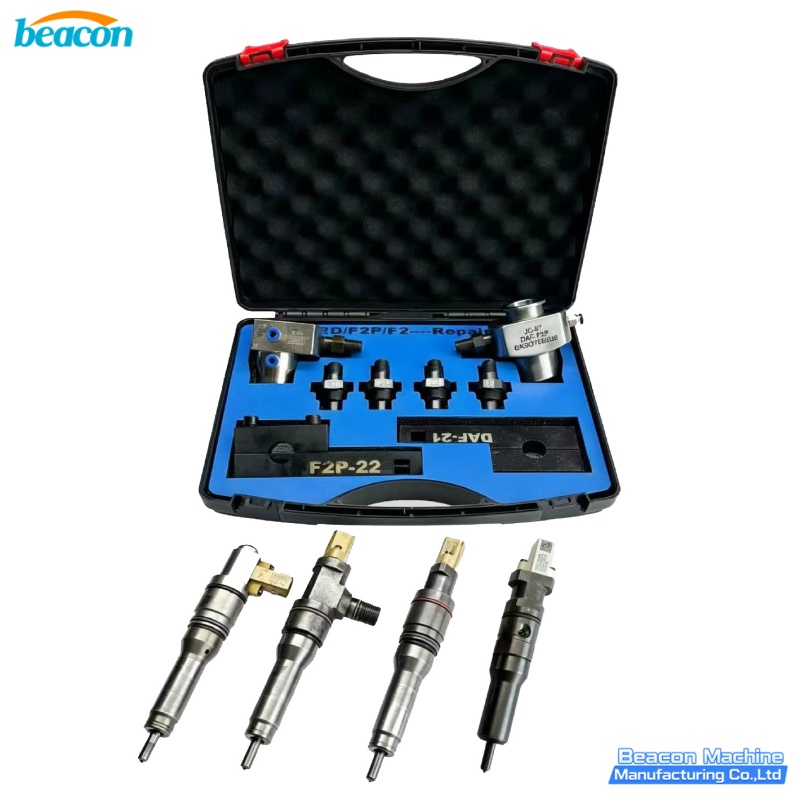
Removing and refitting the Delphi EUI on a Paccar MX13 is not a generic diesel job. The injector sits deep in the cylinder head bore and the high-pressure connector is sensitive to side-load. The job needs:
- Injector socket, 14 mm 6-point deep, 1/2" drive. Standard Delphi EUI removal socket. A 12-point socket will round the hex off after one or two services; spend the extra for the 6-point.
- Injector puller (sliding hammer type). Once the high-pressure connector is off and the retaining clamp is loose, the injector can be stuck in the bore from carbon and heat cycling. A sliding-hammer puller rated for 25 kg+ lift is the right tool; pulling with pry bars damages the bore.
- Copper washer and O-ring kit. Always replace. Reusing the copper washer is the most common cause of a return visit.
- Torque wrench, 1/2" drive, 40–100 N·m range. For the injector retaining clamp and the high-pressure connector nut. The DAF workshop manual gives the exact torque; the torque wrench must be calibrated.
- Seal installation tool (Delphi EUI bore seal). A plastic cone that guides the new O-rings into the bore without cutting them. Fitting O-rings dry into a sharp-edged bore is the second most common cause of a return visit.
- Bench test equipment — see next section. Without a bench test, you have no way to confirm the rebuild is good.
The Delphi EUI rebuild sequence — ultrasonic cleaning, nozzle lapping, iEPC replacement, solenoid test, body inspection — requires a fixture that holds the injector without damage to the iEPC bore. BEACON MACHINE ships a complete Delphi EUI service kit for workshops that prefer to rebuild in-house; the G-series nozzle repair kits and the iEPC-specific service tools cover the BEBJ1D02001 directly.
Why the BEACON CR1017 / CR1029 / EPS211 are the Right Test Benches for This Work
BEACON MACHINE has shipped Delphi EUI test plans into workshops that service the Paccar MX platform across Europe, Russia, the CIS, the Middle East, North Africa and Latin America. The Beijing system database includes the full Delphi EUI family (BEBJ1D, BEBJ4D, BEBJA series) with complete test plans: full-load flow, idle flow, pilot injection volume, leak-off volume, response time, and — uniquely for the CR-series — the iEPC control valve response curve.
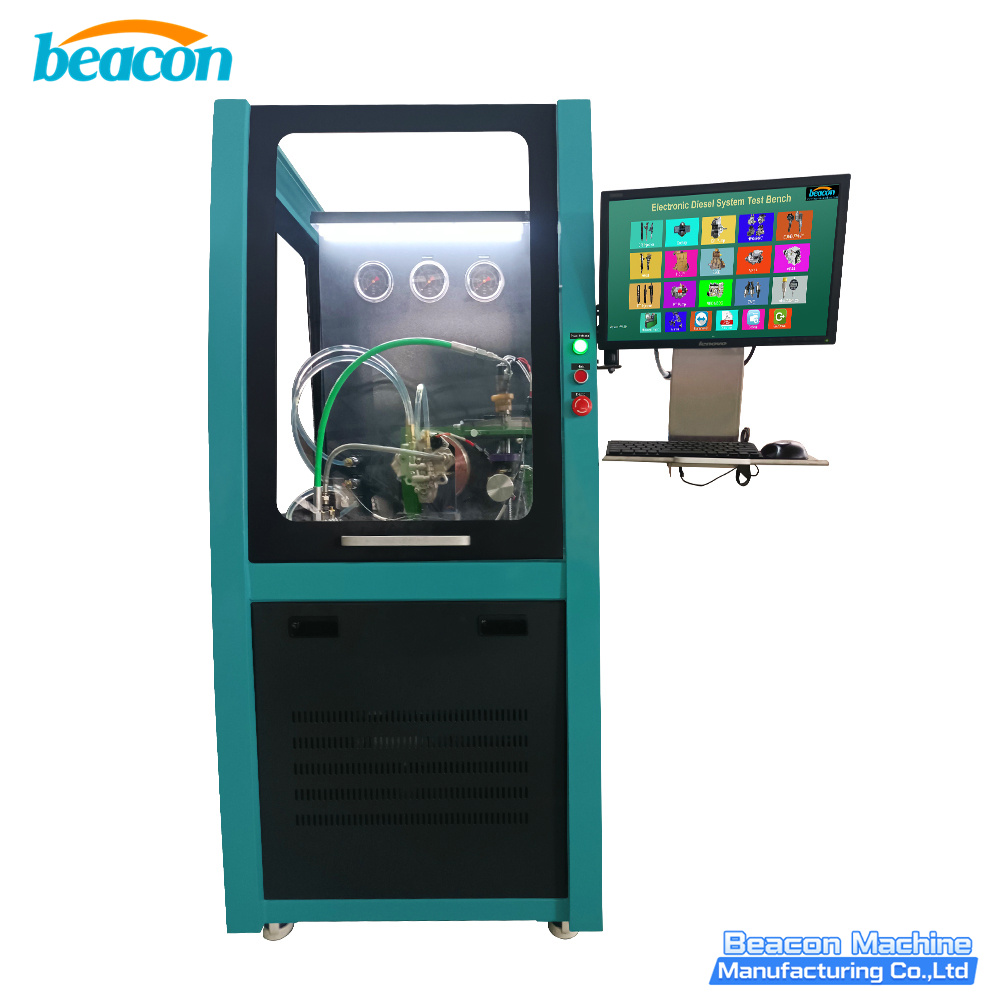
The EPS211 is the entry-level bench for a DAF-focused workshop that handles the BEBJ1D02001 as part of a mixed Bosch / Denso / Delphi service load. 4 kW servo motor, 220V single-phase or 380V three-phase, CP3 high-pressure pump, 2,400 bar maximum pressure. It runs the Delphi EUI test plan from the Beijing database and includes the iEPC control valve test. The compact size (around 145 kg, 90×80×80 cm footprint) fits into a corner of an existing workshop without dedicated space. CRIN2 piezo injector test is also supported, although the BEBJ1D02001 itself is solenoid, not piezo.
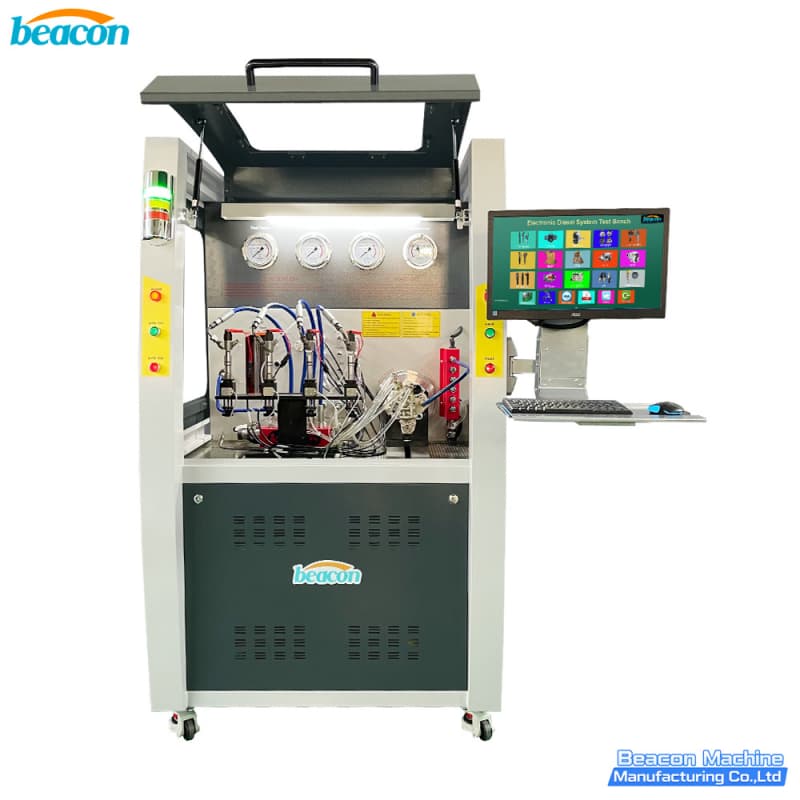
The CR1017 steps up to CRI + CRP coverage — both injector and pump testing on one bench. 5.5 kW motor, 380V three-phase, common rail + pump test as standard, plus the high-pressure pump test function and the Delphi EUI test plan pre-loaded. The CR1017 is the bench to buy if the workshop services a mixed DAF / Volvo / Renault truck flow and wants to test both injectors and pumps on one machine. Built as a direct alternative to OEM-equivalent benches — same database coverage, same Delphi EUI test plans, with the same piezo and solenoid support.
The CR1029 is the workshop-favourite for serious DAF commercial-vehicle work with high throughput. Four independent flow sensors, four simultaneous test channels, Bosch / Denso / Delphi all supported in parallel — including the BEBJ1D02001. 7 kW motor, 380V three-phase, 2,400 bar. With four injectors on test at once, a workshop running 30+ injectors per day through the bench has the throughput headroom to clear the backlog without overloading the cooling system. The four-channel design means the workshop can run a full set of six XF106 injectors in two bench-loads and have the entire engine result documented in 8 minutes flat.
Bench Test Procedure for BEBJ1D02001 on the BEACON CR1017 / CR1029 / EPS211
The standard test plan, automatically loaded when the BEBJ1D02001 part number is selected from the database, runs the following sequence:
- Leak test (static): 30 seconds at 1,600 bar with the solenoid de-energised. Acceptable leak: less than 2 cm³/30s. A leaking injector at this stage points to nozzle seat wear or a body O-ring failure.
- Pilot injection volume (VL): Measure the small pilot injection volume at 250 bar. The BEBJ1D02001 spec is 1.5–4 mm³. Out-of-spec pilot volume usually means the iEPC control valve is worn or contaminated.
- Full-load flow at 1,800 bar: Compare to the factory reference data within 5%. This is the main flow test — out of spec means nozzle wear or solenoid binding.
- Idle flow at 250 bar: Compare to the factory reference data. Out of spec at idle but in spec at full load points to nozzle sluggishness — the cleaning/lapping repair case.
- Response time: Time from solenoid energise to full needle lift. Spec: 0.3–0.6 ms. A slow response points to solenoid coil degradation or iEPC valve wear.
- Leak-off volume: Measure the return fuel over a 60-second cycle. Acceptable: less than 5 cm³/min. Higher leak-off is the O-ring failure case.
- Insulation resistance: Measure between each pin and the injector body. Spec: > 100 MΩ at 500V. Lower than 1 MΩ means the coil has failed.
- iEPC control valve response (Delphi-specific): Sweep the control current and measure the rail pressure decay. A worn or contaminated iEPC shows up as an asymmetric response curve or a slow pressure decay on the rising edge.
Total test time per injector on the EPS211 is about 4 minutes. On the CR1029 with the four-channel option, four injectors at once means the workshop runs 60 injectors per hour through the bench. This is the throughput difference between a workshop that is profitable on XF106 service work and one that is not.
DAF XF106 / Paccar MX13 Injector Compatibility Table
| Truck | Engine | Injector | Test Plan | Recommended Bench |
|---|---|---|---|---|
| XF106 (Euro 6, 2013+) | Paccar MX13 12.9L | Delphi BEBJ1D02001 / DAF 2005596 | Delphi EUI full plan + iEPC test | EPS211 / CR1017 / CR1029 |
| XF106 (EPA13 export, 2017+) | Paccar MX13 12.9L | Delphi BEBJ1D02001 (same Delphi part, different OE label) | Delphi EUI full plan + iEPC test | EPS211 / CR1017 / CR1029 |
| CF (Euro 6, 2013+) | Paccar MX13 12.9L | Same as XF106 | Delphi EUI full plan + iEPC test | EPS211 / CR1017 / CR1029 |
| LF / CF (smaller displacement) | Paccar MX11 10.8L | Delphi BEBJxA series (different) | Delphi EUI for MX11 | EPS211 / CR1017 / CR1029 |
| Older XF105 (Euro 5, 2006–2013) | Paccar MX13 12.9L Euro 5 | Delphi BEBJ1D00002 (different calibration) | Delphi EUI for Euro 5 (not interchangeable) | EPS211 / CR1017 / CR1029 |
| Kenworth T880 / Peterbilt 579 (NA) | Paccar MX13 12.9L EPA13 | Same Delphi part, different OE label | Delphi EUI full plan | EPS211 / CR1017 / CR1029 |
Data compiled from BEACON MACHINE shipments and service records across European, North American, Middle East, North African and CIS markets 2017–2026.
Voltage, Logistics and Language
- Voltage: The XF106 operates on 24V electrical, but the workshop test bench is independent. EPS211 supports both 220V single-phase and 380V three-phase. CR1017 and CR1029 are 380V three-phase. For sites on 110V or 127V supply (Latin America, North America), a step-up transformer is available as an option. For sites on 220V three-phase, no transformer is required.
- Logistics: Wooden crate per machine, dimensions 97×87×104 cm (EPS211) or 110×110×120 cm (CR1029), gross weight 190–410 kg. FOB Qingdao, CIF most major ports (Rotterdam, Hamburg, Marseille, Piraeus, Novorossiysk, St. Petersburg, Mersin, Jeddah, Alexandria, Mombasa, Santos, Veracruz, Buenos Aires, Houston, Long Beach). Sea freight 28–40 days depending on route. Air freight available for the EPS211 at the volumetric weight.
- Language: The Beijing system on all three benches supports 9 languages including English, Spanish, Russian, Arabic, French, Portuguese, German, Italian and Turkish. The interface is configured before shipment in the standard configuration.
BEACON MACHINE Service Record for DAF and Paccar MX Platforms
BEACON MACHINE has supplied diesel test equipment to DAF service workshops and independent Paccar MX rebuilders across more than 25 countries since 2014, including authorised and independent service partners in the Netherlands, Belgium, Germany, Poland, Czech Republic, UK, Ireland, Spain, Italy, Russia, Ukraine, Turkey, Egypt, Algeria, South Africa, Nigeria, Kenya, Mexico, Brazil, Argentina, Chile, Peru, Colombia, and Indonesia. The Paccar MX13 platform with the Delphi BEBJ1D02001 EUI is one of the most common Delphi injector service applications across this customer base. Reference cases and test reports are available on request through WhatsApp or email.
For a configuration discussion on the EPS211, CR1017 or CR1029 with the Delphi BEBJ1D02001 / DAF 2005596 test plan pre-loaded, contact the BEACON MACHINE sales team. We configure the bench, run the acceptance test on a sample Delphi EUI, and ship it ready to use. CIF quotes to your nearest port are typically turned around within 24 hours.