Language
  EN
EN RU
RU ES
ES DE
DE EL
EL IT
IT JA
JA KO
KO PT
PT ID
ID SR
SR UK
UK VI
VI TH
TH TR
TR MS
MS BE
BE AR
ARThe Critical Need for Common Rail Pump Testing Bosch CP1 CP3 Denso HP0
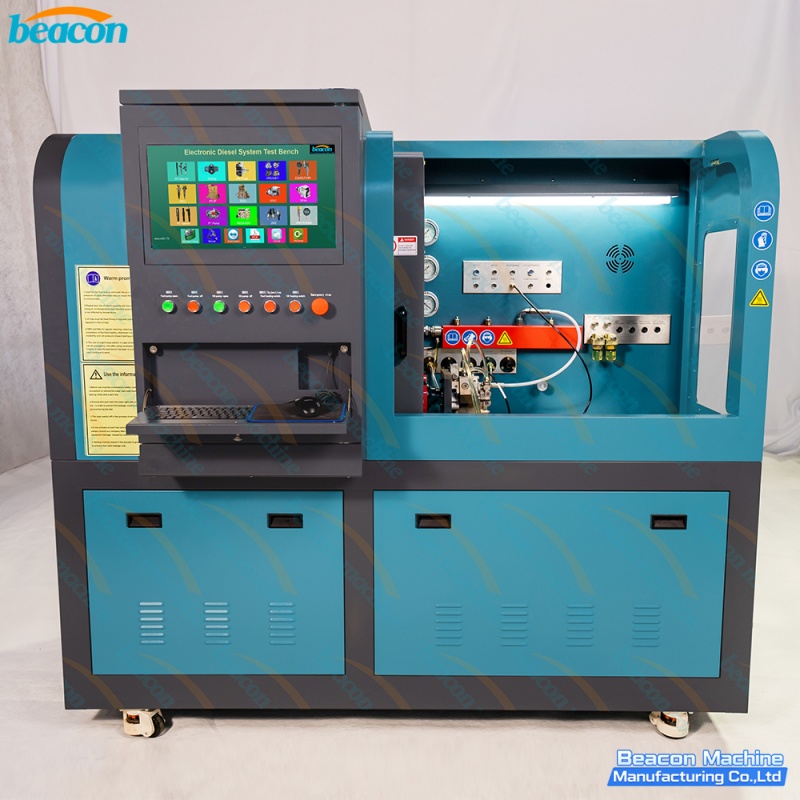
Common rail diesel injection systems have become the industry standard across modern automotive, agricultural, and heavy-duty applications. At the heart of every common rail system lies the high-pressure pump — the component responsible for generating and maintaining the extreme fuel pressures required for precise injection.
Among the most widely used pumps worldwide are the Bosch CP1, Bosch CP3, and Denso HP0. While these pumps are known for their durability, they are not immune to wear, contamination, or performance degradation over time. Testing them on a professional common rail pump test bench is not just recommended — it is essential for accurate diagnostics, reliable repairs, and long-term system health.
Why Test Common Rail Pumps?
• Pressure Output Verification — The primary function of a common rail pump is to deliver fuel at a consistent, controlled high pressure — typically ranging from 1,350 to 2,500 bar depending on the system. Over time, internal wear on the pumping elements, plungers, and delivery valves can cause pressure drop. A test bench measures actual output pressure under load, revealing problems that would go unnoticed during a simple visual inspection.
• Flow Rate and Volume Measurement — Each pump model has a specified flow rate at a given RPM. A worn CP3 pump, for instance, may still produce adequate pressure at idle but fail to deliver sufficient volume under high-demand conditions (e.g., heavy load or high RPM). A test bench quantifies flow performance across the entire operating range.
• Internal Leakage Detection — Internal leakage past plungers, seals, or the fuel quantity control valve reduces both efficiency and maximum achievable pressure. A test bench can identify these leaks by comparing commanded vs. actual pressure and flow behavior.
• Fuel Quantity Control Valve (FCV / SCV / PCV) Testing — Modern common rail pumps rely on electronically controlled metering valves to regulate fuel delivery. These valves are a common failure point. A test bench simulates ECU control signals to verify that the metering valve responds correctly, opens and closes at the proper timing, and maintains stable regulation.
• Diagnosis Before Installation — Installing a used or rebuilt pump without testing is a gamble. A faulty pump can damage injectors, the rail pressure sensor, and even the ECU. Testing on a bench before installation eliminates this risk and ensures the pump is ready for service.
Bosch CP1 Pump
The Bosch CP1 is one of the earliest common rail pumps, introduced in the late 1990s. It is a radial-piston pump with three pumping plungers arranged at 120° intervals. Found in early-generation diesel engines from BMW, Mercedes, Volkswagen, and Renault.
Key characteristics:
• Maximum rail pressure: up to 1,350 bar
• Three-plunger radial design
• Mechanical fuel metering (early versions) or electrical FCV (later versions)
• Prone to: plunger seizure from contaminated fuel, delivery valve wear, low-pressure-side leakage
What a test bench checks on CP1 pumps:
• Maximum achievable pressure at rated RPM
• Flow rate consistency across all three plungers
• FCV response and linearity
• Low-pressure stage seal integrity
Bosch CP3 Pump
The Bosch CP3 is the most widely used common rail pump in the world, found in millions of vehicles from Volkswagen, Audi, BMW, Ford, GM, Chrysler, Cummins, and many others. It is also used in agricultural and industrial diesel engines.
Key characteristics:
• Maximum rail pressure: up to 1,600 bar
• Two-plunger opposed design
• Integrated gear pump for fuel supply
• Electronic fuel quantity control valve (ZME / MEUN)
• Renowned for reliability but not immune to wear
What a test bench checks on CP3 pumps:
• High-pressure output at idle, mid-RPM, and full load
• Gear pump delivery pressure (low-pressure stage)
• ZME/MEUN control valve calibration and response time
• Plunger and cylinder wear detection via pressure ripple analysis
• Overflow valve opening pressure
Denso HP0 Pump
The Denso HP0 is a high-pressure common rail pump used extensively in Japanese and Asian-market diesel vehicles, including Toyota, Nissan, Isuzu, Hino, and Mitsubishi. It features a unique 2-cylinder opposed-piston design with integrated supply pump.
Key characteristics:
• Maximum rail pressure: up to 1,800 bar
• Two-cylinder opposed-piston design
• Integrated trochoid supply pump
• SCV (Suction Control Valve) for fuel metering
• Known for sensitivity to fuel contamination
What a test bench checks on HP0 pumps:
• Maximum pressure generation capability
• SCV control characteristics (current vs. flow mapping)
• Supply pump delivery pressure
• Internal leakage rate through plunger clearances
• Drive coupling wear and shaft seal condition
Comparison Table
Parameter | Bosch CP1 | Bosch CP3 | Denso HP0 |
Max Rail Pressure | 1,350 bar | 1,600 bar | 1,800 bar |
Design | 3-plunger radial | 2-plunger opposed | 2-cylinder opposed |
Fuel Metering | Mechanical / FCV | ZME / MEUN | SCV |
Supply Pump | None (external) | Integrated gear pump | Integrated trochoid pump |
Common Applications | Early BMW, Mercedes, VW | VW, Ford, Cummins, GM | Toyota, Nissan, Isuzu |
Typical Failure | Plunger seizure, delivery valve wear | Gear pump wear, FCV failure | SCV failure, shaft seal leak |
Conclusion
In modern diesel injection service, testing common rail pumps on a dedicated test bench is not optional — it is a fundamental requirement for accurate diagnostics, quality repairs, and customer satisfaction. Whether it is the earlier Bosch CP1, the ubiquitous Bosch CP3, or the robust Denso HP0, each pump has its own failure patterns and testing requirements that only a proper test bench can address.
A high-quality multifunctional test bench — such as the BEACON CR919 — supports all three pump types, providing comprehensive testing for CP1, CP3, and HP0 pumps alongside common rail injectors, piezo injectors, EUI/EUP, and HEUI systems. This makes it the ideal investment for any professional diesel injection workshop aiming to deliver reliable, thorough service to its customers.
To learn more model for common rail injector test ,please check our catalog(Click)
Related products
CRS3 Common Rail Tester with Piezo Test Function CR2000A Injector Controller
CR301 Common Rail Injector Test Bench Solenoid & Piezo Tester for Bosch Denso Delphi
CR819 Diesel Fuel Common Rail Injector Common Rail Pump Test Bench
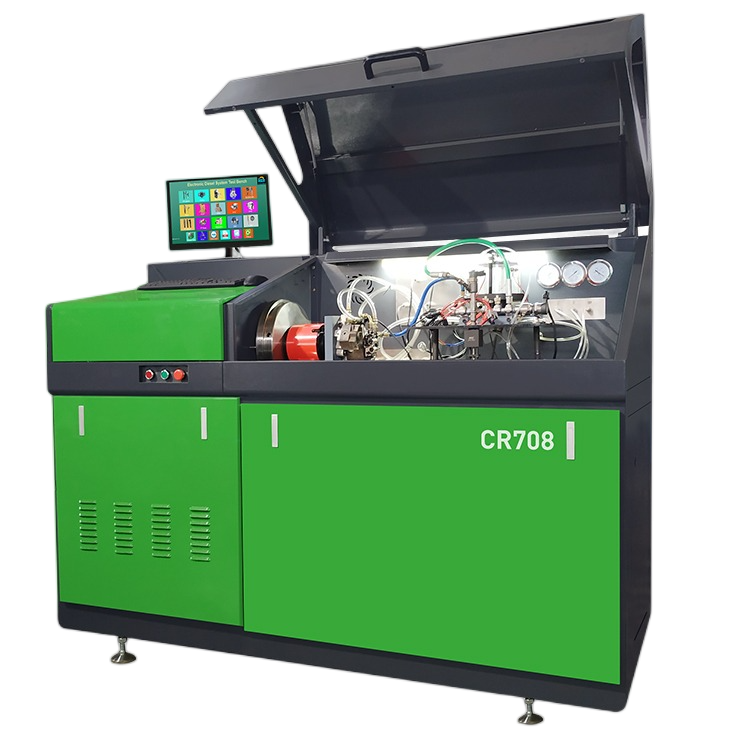
CR708 Diesel Fuel Common Rail Injector and Common Rail Pump Test Bench